How to Protect Potted Plants From Frost This Winter
Container roots freeze faster than plants in the ground. Here's how to protect potted plants from frost, with a quick answer first and then advice by plant type.
The first frost forecast of the season always seems to arrive with a day’s notice. If you want to protect potted plants before it hits, the short version is below, followed by a closer look at what each type of plant needs.
Quick answer
Move tender plants indoors or into a frost-free greenhouse before the first frost.
Group hardy pots together against a house wall, out of the wind.
Wrap the pots themselves with bubble wrap, burlap or fleece to insulate the roots.
Raise pots on pot feet or bricks so water drains away.
Water lightly; keep compost just moist, never soggy.
On the coldest nights, drape horticultural fleece over the foliage.
Why frost hits container plants harder
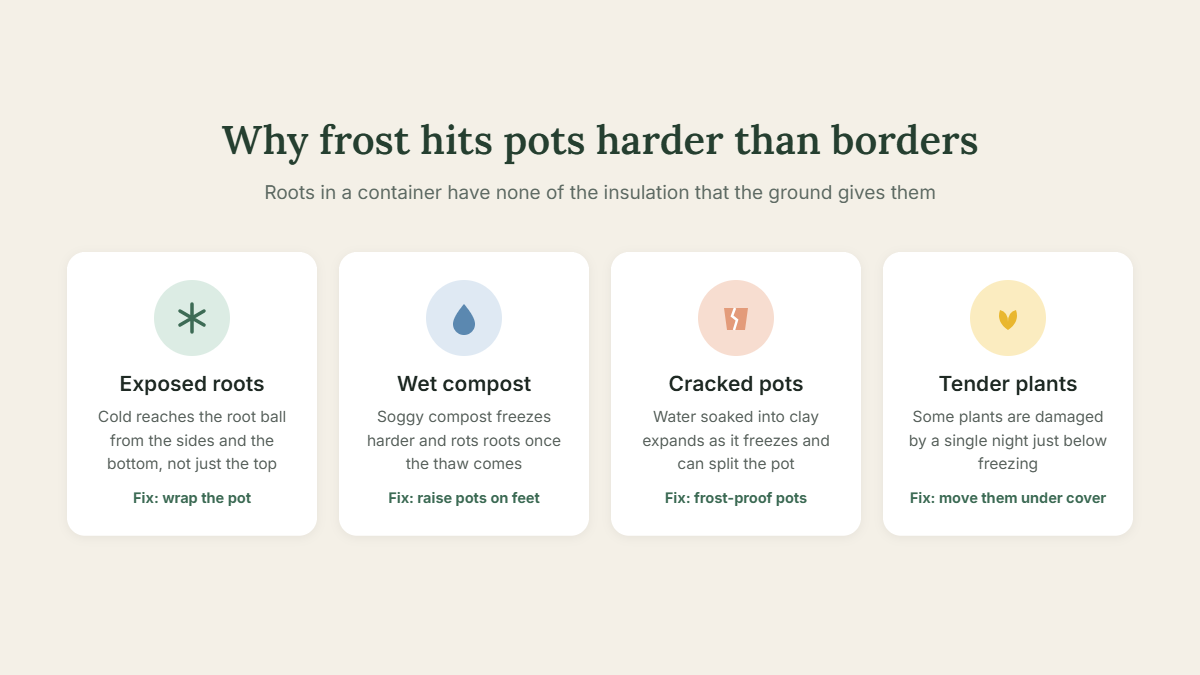
A plant in the ground has a huge mass of soil around its roots. That soil holds warmth and buffers sudden drops in temperature.
A pot has none of that. Cold air surrounds it on every side, so the compost can freeze right through. Roots are usually less hardy than the stems and leaves above, which is why a plant that’s perfectly happy in a border can be lost in a container.
Wet compost makes things worse. Water expands as it freezes, which damages roots and can crack the pot.
The RHS advice on preventing winter damage covers this too, including wrapping containers and moving plants into shelter.
When to protect potted plants
Start watching forecasts from mid-fall. Don’t wait for a hard frost, because one cold night is enough to kill tender plants.
Watch for clear, still evenings. Cloud acts like a blanket, so frosts tend to form when skies are clear and there’s little wind.
Have your fleece, wrapping and pot feet ready before you need them. It’s much easier than rushing outside in the dark.
Deep dive: how to protect potted plants by type
Different plants need very different levels of care, so the way you protect potted plants depends on what’s growing in them. Find yours below.
Tender plants (pelargoniums, citrus, cannas, begonias)
These can’t survive frost at all. The only reliable way to protect potted plants like these is to bring them in before the first frost forecast.
- Where: a bright, cool room, a porch, a conservatory or a frost-free greenhouse.
- Watering: cut right back. Most need just enough to stop the compost drying out completely.
- Light: a bright windowsill helps, especially for citrus, which keeps its leaves in winter.
Check them for pests before bringing them inside, so you don’t carry aphids or scale insects into the house.
Half-hardy plants (fuchsias, agapanthus, some salvias)
These cope with light frost but may suffer in a prolonged cold snap, especially in pots.
- Move them into the most sheltered spot you have, such as against a south- or west-facing wall.
- Wrap the containers to insulate the roots.
- Cover the top growth with fleece on the coldest nights.
- If you have space, an unheated greenhouse, cold frame or garage with a window gives extra safety.
Hardy shrubs and small trees (box, bay, Japanese maples, olives)
These are tough in the ground, but containers expose their roots. To protect potted plants in this group, focus on the pot.
- Wrap it in bubble wrap, burlap or a layer of fleece, tied with string.
- Stand it on pot feet so excess water drains away.
- Group several pots together so they shelter each other.
- Avoid wrapping the foliage in plastic. It traps moisture and can cause rot.
Evergreens still lose water through their leaves in winter. Check the compost during dry, windy spells and water lightly if it feels dry a few centimeters down.
Herbs (rosemary, thyme, sage, basil)
Mediterranean herbs such as rosemary, thyme and sage are fairly hardy. What really damages them is cold combined with wet roots.
- Move pots under the eaves of the house, where they’ll get less rain.
- Use pot feet and avoid saucers that hold water.
- Bring basil and other tender annual herbs indoors to a sunny windowsill.
Bulbs in containers (tulips, daffodils, crocuses)
Spring bulbs need a cold period, so they shouldn’t come indoors. Instead, protect the pot from freezing solid and from waterlogging.
Wrap or group the containers, raise them on feet and place them against a wall. If you’re planning a display for next year, our guide to planting spring bulbs in fall covers depth and spacing for pots.
Succulents and cacti
Most of the succulents grown in containers dislike frost and hate wet compost. Many common types, such as echeverias and aloes, should come in before the cold arrives.
Keep them dry over winter, water sparingly and give them as much light as you can. Hardier types like some sempervivums can stay outside if they’re under shelter from rain.
Will frost crack my pots?
It can. Terracotta and some glazed ceramics absorb water. When that water freezes, it expands and can flake or crack the pot.
To protect potted plants and their containers:
- Choose pots labeled frost-resistant or frost-proof when buying new ones.
- Raise pots on feet so they don’t sit in water.
- Wrap vulnerable pots in burlap or bubble wrap.
- Move empty terracotta pots into a shed or garage for winter.
Plastic, fiberglass, wood and metal containers are less likely to crack, though metal gets cold quickly, so wrap it too.
The best spots to protect potted plants outdoors
If you can’t bring pots inside, where you put them still makes a real difference.
- Against the house wall. Walls give off a little stored warmth and block wind. South- and west-facing walls are usually the warmest.
- Under the eaves or a porch roof. This keeps rain off, so compost stays drier.
- In a cluster. Pots grouped tightly shelter each other. Put the tougher plants on the outside and the more delicate ones in the middle.
- Away from frost pockets. Cold air sinks, so the lowest part of a yard is often the coldest.
- Out of the morning sun. For frozen plants, a slow thaw is gentler than direct early sun.
Moving garden furniture away for winter can free up a sheltered corner. Our guide on how to store garden furniture over winter covers what to do with chairs and tables.
Signs of frost damage and what to do
Frost-damaged leaves often look blackened, limp or glassy, then turn brown. Don’t rush to prune.
Leave damaged growth in place until spring. It helps protect potted plants from further cold underneath. Once the risk of frost has passed, cut back to healthy growth and new shoots usually follow.
If the whole plant has collapsed and the stems are soft, check the roots. Firm, pale roots suggest it may recover. Mushy, dark roots usually mean the plant is lost.
Watering in winter
Plants grow very slowly in cold weather and use far less water. Overwatering is a common cause of winter losses in containers.
Water in the morning on milder days, so excess drains before night. Feel the compost first; if it’s still damp a little below the surface, skip it. For more detail, our guide to watering container plants explains how to judge it by feel and weight.
Simple frost protection materials
You don’t need to buy much. These cover most needs:
| Material | Use it for | Tip |
|---|---|---|
| Horticultural fleece | Covering foliage on cold nights | Use a double layer in hard frosts |
| Bubble wrap | Insulating pots | Wrap the pot, not the plant |
| Burlap | Wrapping pots and shrubs | Looks neater and breathes well |
| Pot feet or bricks | Drainage | Keep pots off frozen, wet ground |
| Straw or dry leaves | Packing between grouped pots | Keep it dry or it rots |
Frequently asked questions
What temperature should I protect potted plants at?
Act when frost is forecast, which usually means temperatures near or below 0°C (32°F). Tender plants can suffer even before that, so bring them in early.
Can I cover potted plants with plastic bags?
It’s better not to put plastic directly on foliage. It traps moisture, can cause rot and gives little insulation. Use fleece over plants, and save plastic like bubble wrap for the pots.
Should I water potted plants before a frost?
Only if the compost is dry, and do it in the morning. Soggy compost freezes harder and can damage roots, so avoid heavy watering before a cold night.
How long can fleece stay on plants?
Fleece can stay on during a cold spell, since it lets light and air through. Remove it once milder weather returns so plants don’t stay damp.