How to Keep Your Dog Calm During Fireworks
A before, during and after timeline to keep your dog calm during fireworks, from sound training weeks ahead to safety checks the morning after.
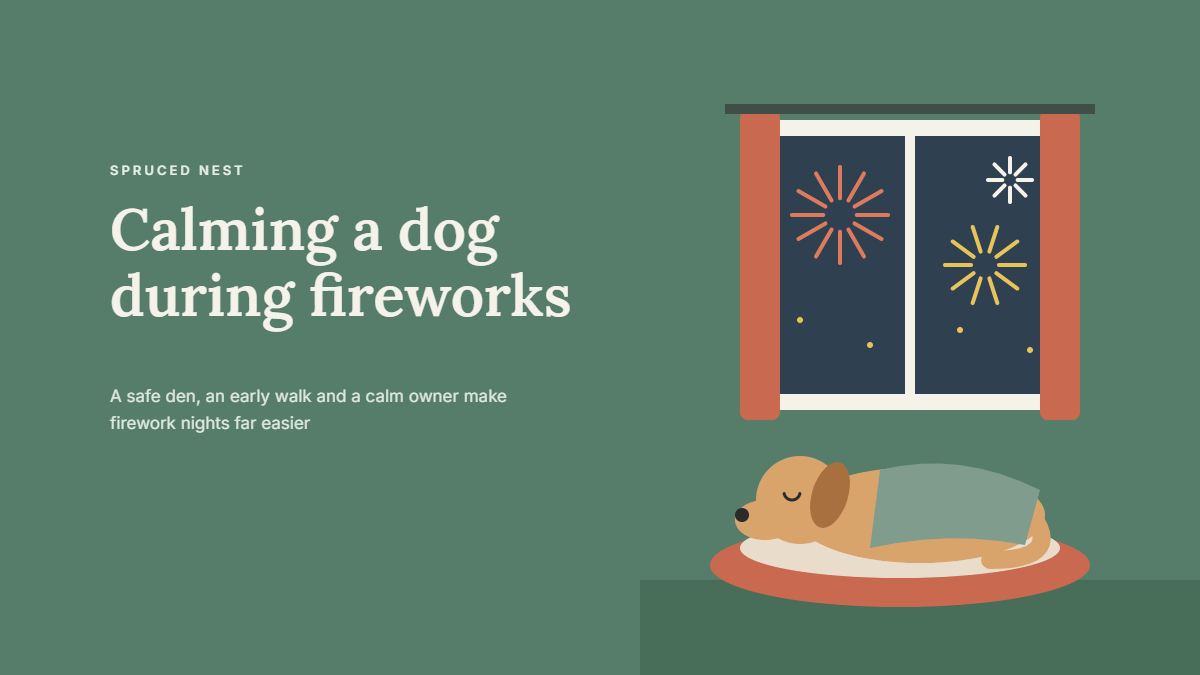
Say the first rocket goes up at 7pm and your dog bolts behind the sofa, shaking. If that sounds familiar, the good news is that you can do a lot to keep your dog calm during fireworks, and most of it happens before the night itself.
Fireworks are loud, sudden and unpredictable. A dog has no way of knowing they’re harmless. So the aim isn’t to make your dog love the noise. It’s to give them a safe place, a calm routine, and a bit of practice beforehand.
Below is a timeline you can follow, starting about six weeks out. Big fireworks dates vary by country, from the Fourth of July and New Year’s Eve to Bonfire Night and Diwali, so count back from whichever applies to you.
Know the signs of fear first
Not every frightened dog hides. Some show stress in quieter ways. Watch for:
- Panting, drooling or yawning when they’re not tired or hot
- Pacing, trembling or sticking close to you
- Hiding, digging or trying to get into small spaces
- Barking, whining or howling
- Refusing food or treats
- Toileting indoors when they’re normally clean
- Trying to escape through doors, fences or gates
Spotting these early makes it easier to keep your dog calm during fireworks later, because you’ll know what “worried” looks like for your dog. If your dog shows several of these, especially if they’ve hurt themselves trying to escape before, start planning early.
Six or more weeks before: a vet plan to keep your dog calm during fireworks
Book a check-up if your dog has a history of severe fear. Your vet can rule out pain or other health issues that make noise sensitivity worse, and discuss whether medication or calming products might suit your dog.
Some prescription options need to be started in advance or tested first, so this step can’t wait until the week of the fireworks. For long-term help, your vet may also refer you to a qualified behaviorist.
Never give your dog human medication or anything another pet was prescribed.
Four to six weeks before: start sound training
Desensitization means getting your dog used to firework noises at a very low level, then slowly turning it up. The Royal Society for the Prevention of Cruelty to Animals offers free advice and sound resources on its page about keeping pets safe during fireworks.
How to practice:
- Play firework sounds so quietly your dog barely notices.
- While the sound plays, do something your dog loves: a treat, a game, a chew.
- Stop the sound and the fun at the same time.
- Over days and weeks, raise the volume a tiny amount.
- If your dog looks worried at any point, go back to a lower volume.
Short sessions work best, and steady practice is one of the most reliable ways to keep a dog calm during fireworks. Five minutes a day is plenty. If your dog reacts strongly even at the quietest level, stop and ask your vet or a behaviorist for help.
Two to three weeks before: a den to keep your dog calm during fireworks
Choose a quiet room, ideally one with few windows. Then set up a cozy hiding spot where your dog can retreat.
- A covered crate with the door left open, or a space under a table draped with a blanket
- Thick bedding, plus a worn T-shirt that smells of you
- A favorite chew or toy
- Water within reach
Let your dog use the den on normal days so it already feels safe. Wash the bedding a few days before, so it’s fresh but still familiar. Our guide on how to wash a dog bed covers the gentlest way to do it.
Calming products: what to know
You’ll see plenty of products sold to keep a dog calm during fireworks. These include snug-fitting anxiety wraps, plug-in pheromone products and calming treats. Some owners find them useful. However, results vary from dog to dog, and they work best alongside training and a safe den, not instead of them.
Try any new product on a quiet evening first, so your dog isn’t meeting something unfamiliar on a stressful night. And check with your vet before using supplements, especially if your dog takes other medication.
One week before: safety checks
Frightened dogs can run, so this week is about making escape unlikely and recovery easy if it happens.
- Microchip. Check your contact details are up to date with the database.
- ID tag. Make sure the collar tag has a current phone number.
- Garden and fences. Look for gaps, loose panels and weak gate latches.
- Local dates. Note when nearby displays are planned. Many areas have fireworks on several nights, not just one.
- Plans. If possible, arrange for someone to be home with your dog on the main nights.
On the day: how to keep your dog calm during fireworks
The day itself is about routine and timing. Small changes make a big difference.
Daytime
- Walk early. Take a long walk in daylight, before fireworks are likely to start.
- Feed earlier. Give the evening meal an hour or two before dark. A nervous dog may not eat later.
- Toilet break. Take your dog out on a lead for a last trip before it gets dark, even in your own garden.
Before dark
- Close curtains and blinds to block flashes.
- Shut windows and pet flaps, and lock doors that lead outside.
- Turn on the TV or calm music at a normal volume to soften the bangs.
- Check your dog’s den is ready and the room is a comfortable temperature.
During: keeping your dog calm during fireworks
Once the bangs begin, stay calm and act normally. Your own calm is the simplest way to keep your dog calm during fireworks. Your dog will take cues from you.
Do:
- Let your dog hide if they want to. Don’t pull them out of the den.
- Offer calm reassurance if they come to you for comfort.
- Give a long-lasting chew or a stuffed food toy if they’ll take it.
- Stay home, or have someone they know stay with them.
Don’t:
- Tell your dog off for barking, shaking or accidents. They’re scared, not naughty.
- Take your dog to a fireworks display.
- Leave your dog alone in the garden or in a car.
- Open the front door without checking where your dog is first.
If an accident happens indoors, clean it quietly later. An enzyme cleaner works best, as explained in our guide to getting pet urine smell out of carpet.
The morning after
Fireworks can leave debris behind, and some dogs stay jumpy for a day or two.
- Check your garden for spent fireworks, sticks and wrappers before letting your dog out.
- Keep your dog on a lead for walks over the next few days, especially if there are more displays planned.
- Watch for lingering signs of stress, such as reduced appetite or being extra clingy.
- Return to normal routines as soon as you can.
The following weeks: plan for next time
Take notes while it’s fresh. What helped? What didn’t? Was there one night that was worse than the rest?
If your dog was very distressed, speak to your vet now rather than next year. Long-term training with a qualified behaviorist can help your dog cope better over time, and it’s much easier to start when there are no fireworks around.
Finally, keep up the sound training in short sessions through the year. Then, next season, you’re starting from a better place.

Timeline to keep your dog calm during fireworks
Use this table as a quick reference for the whole season:
| When | Main jobs |
|---|---|
| 6+ weeks before | Vet check, discuss medication or behaviorist |
| 4 to 6 weeks before | Start low-volume sound training with treats |
| 2 to 3 weeks before | Build and introduce a safe den |
| 1 week before | Check microchip, ID tag, fences and local dates |
| On the day | Daylight walk, early meal, curtains closed, music on |
| During | Let them hide, stay calm, no punishment, doors closed |
| Morning after | Clear debris, lead walks, watch for stress |
| Following weeks | Review, talk to your vet, keep training |
Start with the step that matches today’s date, and work forward from there.



2 comments