How to Clean a Microwave Without Scrubbing (4 Methods Compared)
Lemon, vinegar, baking soda or dish soap: four steam methods to clean a microwave without scrubbing, compared side by side with a verdict on which to use when.
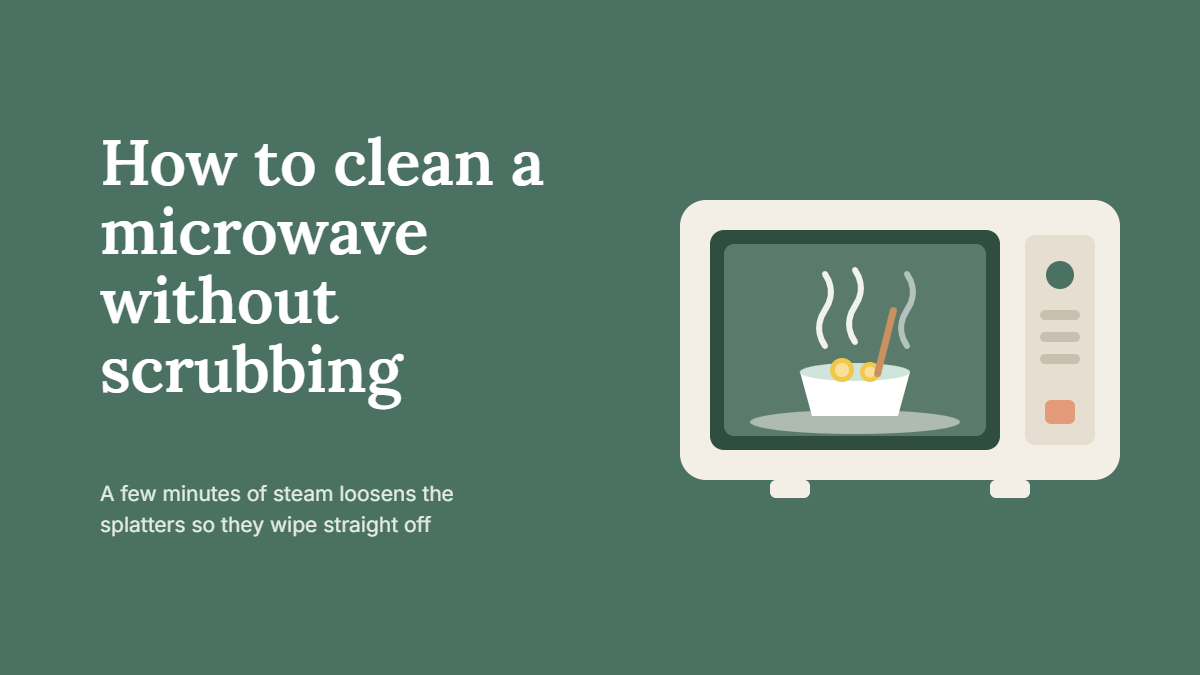
Here’s a bold claim: you almost never need to scrub a microwave. To clean a microwave, all you really need is a bowl of water, a few minutes of steam and a cloth. The only real question is what to add to the water.
Lemon, vinegar, baking soda and dish soap are the four most common choices. Each one works, but they’re not equally good at everything. Some cut grease better. Others are better for smells or dried-on splatters.
Below, you’ll find the basic steam method, a closer look at each option, a side-by-side comparison table and a verdict on when to use which.
Why steam is the easiest way to clean a microwave
Splatters cling because they bake dry onto the walls and roof of the cavity. Moisture softens them again.
When you heat a bowl of water, the moisture condenses on every surface inside the cavity. After a few minutes, the dried-on food softens enough to wipe straight off. The additive in the water just helps a little more with grease or odors.
What you need to clean a microwave
Most of this is already in your kitchen:
- A wide, microwave-safe glass or ceramic bowl
- Water
- Your chosen additive: a lemon, white vinegar, baking soda or dish soap
- A soft sponge or microfiber cloth
- Oven mitts for lifting the hot bowl
- A dry towel to finish
Skip anything abrasive. You won’t need it.
The basic method to clean a microwave
Every method below follows the same steps. Only the bowl’s contents change.
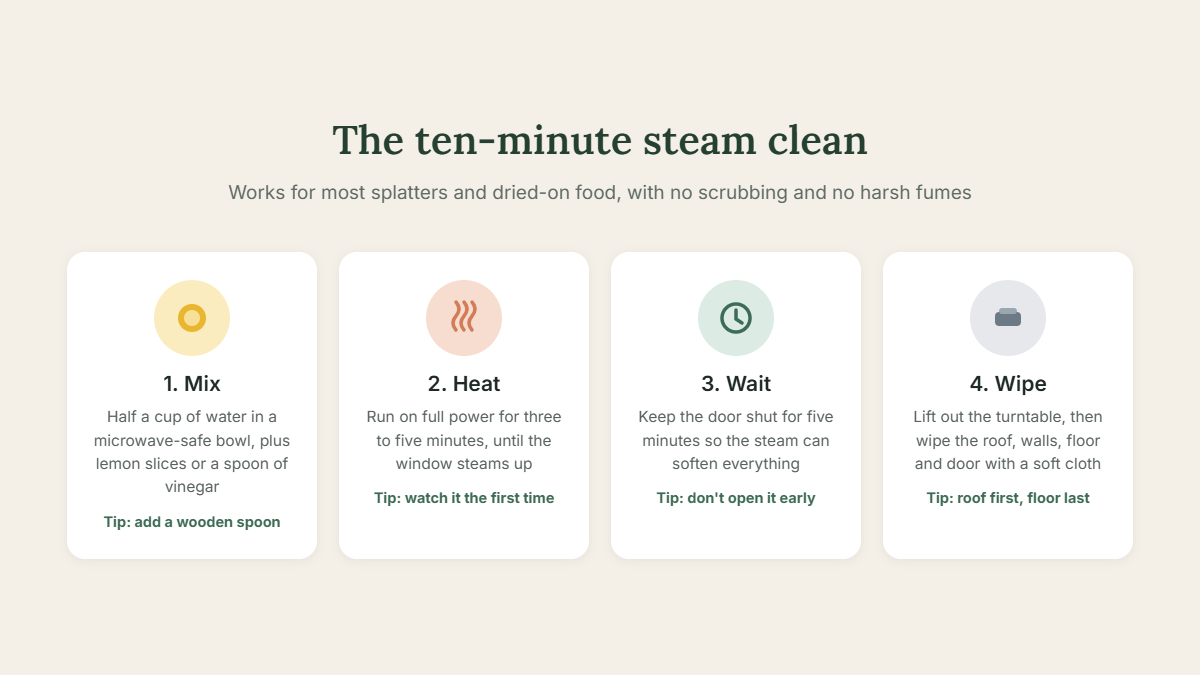
- Fill a microwave-safe bowl with about one cup (250 ml) of water and your chosen additive. Use a wide bowl rather than a tall mug.
- Heat on high for 3 to 5 minutes, until the window is steamy and the water is bubbling.
- Leave the door closed for 5 minutes. This lets the steam keep working and gives the bowl time to cool.
- Carefully lift out the bowl using oven mitts. It will be very hot.
- Remove the turntable and its roller ring.
- Wipe from the top down with a soft cloth or sponge: ceiling first, then walls, then the floor of the cavity.
- Wash the turntable in warm soapy water, then dry everything.
A safety note: water heated in a microwave can become superheated and boil up suddenly when moved. The FDA explains this risk on its microwave oven safety page. Don’t overheat the bowl, let it stand before removing it, and keep your face away as you lift it out.
Method 1: Clean a microwave with lemon water
How: squeeze the juice of half a lemon into the water, then drop the lemon half in too.
Good for: light splatters, everyday grime and a lingering food smell. The citrus scent replaces cooking odors, which is why it’s such a popular option.
Downsides: it’s not the strongest choice on thick grease, and you need a fresh lemon.
Bottled lemon juice (about two tablespoons) works almost as well if you don’t have a fresh one.
Method 2: Clean a microwave with white vinegar
How: add about two tablespoons of white vinegar to the water.
Good for: greasy splatters and strong smells such as fish or burnt popcorn. Vinegar’s mild acidity helps loosen grease, and the smell fades quickly once you open the door.
Downsides: the sharp smell while it steams. Some people mix in a slice of lemon to soften it.
Never combine vinegar with bleach-based cleaners. Mixing the two creates harmful fumes.
Method 3: Baking soda
How: stir one tablespoon of baking soda into the water until it dissolves.
Good for: odors and stubborn stains. It’s the gentlest way to clean a microwave that smells stale. After steaming, any spots that didn’t wipe off can be treated with a paste of baking soda and a little water. Leave it for five minutes, then wipe with a damp cloth.
Downsides: in steam form alone, it’s slightly less effective on grease than vinegar.
Baking soda is gently abrasive, so use it with a soft cloth, not a scouring pad, to avoid scratching the interior.
Method 4: Dish soap
How: add a few drops of dish soap to the water. Use a large bowl, since it can foam.
Good for: greasy, oily splatters from reheated sauces, soups and leftovers. Dish soap is designed to break up grease, and the steam spreads a little of it over every surface.
Downsides: you’ll need an extra wipe with a clean, damp cloth afterward to remove any residue.
It’s a handy option if you have nothing else in the cupboard. It’s also gentle enough to clean a microwave several times a week if you cook a lot of greasy food.
Side-by-side comparison
Here’s how the four options stack up when you clean a microwave with steam.
| Method | Best at | Smell | Cost | Extra wipe needed |
|---|---|---|---|---|
| Lemon water | Light grime and odors | Fresh citrus | Low | No |
| White vinegar | Grease and strong odors | Sharp while steaming | Very low | No |
| Baking soda | Odors and stuck-on spots | Neutral | Very low | Sometimes |
| Dish soap | Greasy splatters | Mild | Very low | Yes |
Stubborn stains and burnt-on food
If anything is still stuck after you clean a microwave with steam, don’t reach for steel wool. It can scratch the coating and damage the cavity.
Instead, repeat the steam step for another two or three minutes. Then press a warm, damp cloth onto the spot for a minute before wiping. For very old marks, apply a baking soda paste and leave it for 10 minutes before wiping.
For the same no-scrub approach in a bigger appliance, our guide on how to clean an oven without scrubbing uses a similar soften-then-wipe method.
What not to do when you clean a microwave
A few habits cause more harm than good:
- Don’t run the microwave empty. Always have water or food inside when it’s on.
- Don’t spray cleaner into the vents. Spray onto a cloth instead.
- Don’t use abrasive pads or harsh powders on the interior.
- Don’t use metal scourers or put metal inside while it’s running.
- Don’t soak the control panel. Wipe it with a barely damp cloth.
Getting rid of a burnt smell
Burnt popcorn or scorched food can leave a smell that lingers for days. Steam alone sometimes isn’t enough.
First, clean a microwave the usual way with vinegar or lemon water, so any burnt residue is gone. Then leave the door open for a while to air it out.
If the smell persists, leave a small dish of dry baking soda in the switched-off microwave with the door shut until morning. Baking soda helps absorb odors. Remove it before you use the microwave again.
Still noticing it after a couple of days? Repeat the vinegar steam once more. Most smells fade completely after a second round.
Don’t forget the outside
To clean a microwave properly, finish with the parts that get handled the most.
- Door seal and edges: wipe with a damp cloth; crumbs often hide here.
- Handle and buttons: a cloth with a drop of dish soap removes greasy fingerprints.
- Exterior and top: dust and grease collect here, especially on over-the-range models.
- The filter (over-the-range models): check your manual; many grease filters can be washed in hot soapy water.
How often to clean a microwave
A quick wipe after any big splatter keeps things easy. Beyond that, a steam clean every week or two is plenty for most homes.
To keep splatters down, cover food with a microwave-safe lid or a paper towel while heating. And while you’re in cleaning mode, other kitchen appliances benefit from a regular refresh too, like a kettle prone to limescale; our guide on how to descale a kettle uses similar simple ingredients.
The verdict
All four methods can clean a microwave without scrubbing. The best one depends on the mess:
- For everyday cleaning and fresh smells: lemon water.
- For grease and strong odors: white vinegar.
- For stuck-on spots after steaming: a baking soda paste.
- For oily splatters when the cupboard is bare: dish soap, followed by a clean wipe.
If you only keep one thing on hand, make it white vinegar. It’s cheap, it handles the widest range of messes, and a slice of lemon in the bowl takes care of the smell.