How to Wash a Dog Bed (and Actually Get the Smell Out)
A step-by-step tutorial to wash a dog bed in the machine or by hand, with a what-you-need checklist and tips to get rid of lingering smells.

Quick answer: To wash a dog bed, vacuum off the hair, treat stains with an enzyme cleaner first, then wash the cover on the warmest setting its label allows with a fragrance-free detergent and an extra rinse. Dry everything completely before your dog lies on it again.
That’s the short version. However, the details matter, because a bed that comes out still damp or still smelly sends you right back to the start. This tutorial walks through each step, for both machine-washable beds and the bulky ones that won’t fit in a washer.
Before you wash a dog bed: check the label
Every bed is built differently. So, first find the care tag on the cover and, if there is one, on the inner cushion.
Look for three things:
- Whether the cover is removable
- The maximum wash temperature
- Whether the filling can go in a machine or dryer
Memory foam, orthopedic foam and some stuffed beds can’t take a machine wash. If the label is missing, treat the filling as hand-wash only. It’s safer to be cautious than to end up with lumpy, torn stuffing.
What you need to wash a dog bed
| Machine-washable bed | Non-machine-washable bed |
|---|---|
| Vacuum with an upholstery tool | Vacuum with an upholstery tool |
| Lint roller or rubber glove | Lint roller or rubber glove |
| Enzyme stain remover | Enzyme stain remover |
| Fragrance-free, mild detergent | Fragrance-free, mild detergent |
| Large-capacity washing machine | Bathtub or large tub |
| Dryer with a low heat setting, or a drying rack | Old towels for pressing out water |
| Baking soda (optional) | Baking soda and a spray bottle |
How to wash a dog bed in a machine
Step 1: Remove as much hair as you can
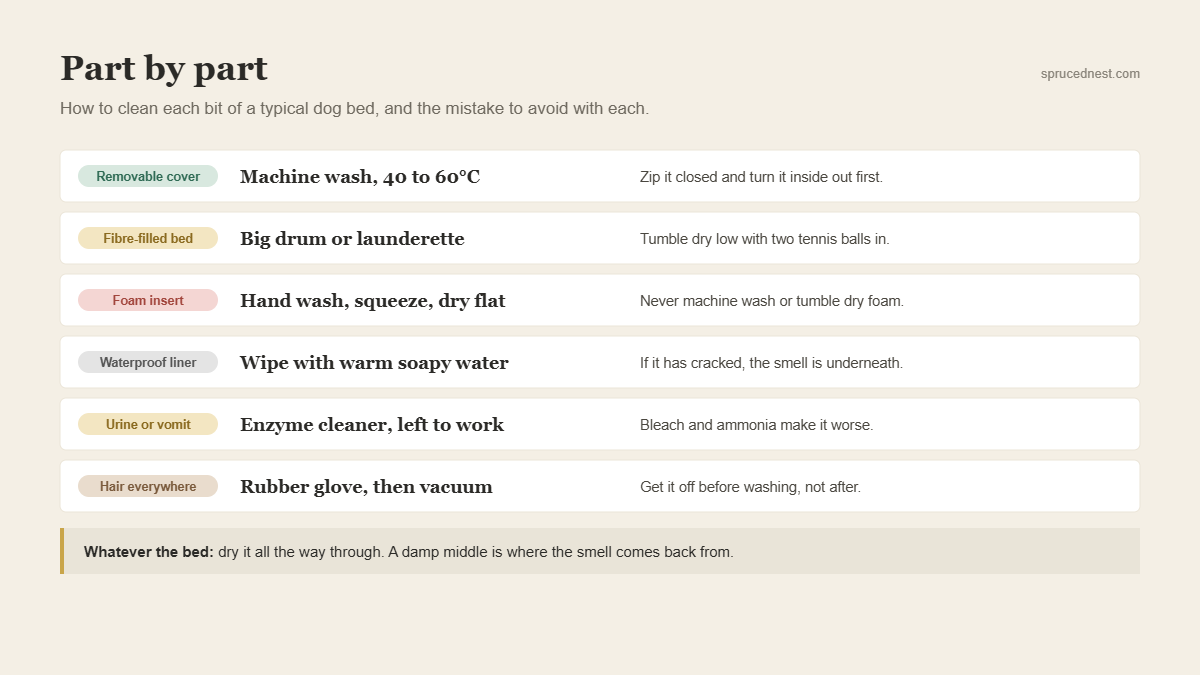
Take the bed outside and give it a good shake. Then vacuum both sides with the upholstery tool. A damp rubber glove or a lint roller picks up the hair the vacuum misses.
This step matters more than people think when you wash a dog bed. Hair clumps in the drum, clogs the filter, and ends up stuck back on the clean cover. For dogs that shed heavily, our tips to remove pet hair from carpets, sofas and clothes work on beds too.
Step 2: Treat stains and odors first
Spray any stains, drool marks or accident spots with an enzyme cleaner. Enzymes break down the organic matter behind the smell, rather than just covering it up. Leave it for the time the product recommends, usually 10 to 15 minutes, before you wash a dog bed cover.
If your dog has had an accident on the floor nearby, the same approach helps there. See our guide to getting pet urine smell out of carpet.
Step 3: Separate the cover and the insert
Unzip the cover and turn it inside out. Wash the cover and the insert separately if both are machine-safe. Together, they can be too bulky for the water to move through properly.
Step 4: Pick the right cycle to wash a dog bed
Use the warmest temperature the care label allows. Add a mild, fragrance-free detergent. Then pick an extra rinse, so no residue is left behind to irritate your dog’s skin.
Skip strongly scented products and fabric softener. Also, never add essential oils for a “fresh” smell. Several common oils can be harmful to pets, and the ASPCA keeps a useful list of household products that can be dangerous for animals.
Step 5: Wash the insert on a gentle cycle
If the insert is machine-washable, wash it on a gentle cycle with a cool or warm setting. Adding two or three clean tennis balls helps keep the filling from bunching. Make sure the machine isn’t packed too tightly.
Step 6: Dry it completely
Drying is the step that decides whether you wash a dog bed once or twice. It is where most smells come from. A bed that stays damp inside soon starts to smell sour again.
Tumble dry on low heat if the label allows, and stop to fluff the filling every 20 minutes or so. Otherwise, hang the cover and lay the insert flat in a warm, airy spot. Sunlight helps on a dry day. Squeeze the thickest part before you put it back; if it feels cool, it’s still damp.
How to wash a dog bed that won’t fit in a machine
Big beds, foam mattresses and beds with sewn-in covers need a hands-on approach. It takes a little longer, but the result is just as clean.
- Vacuum and spot clean. As before, remove the hair first. Then treat stains with the enzyme cleaner and blot, rather than rub.
- Hand-wash in the tub. Fill a bathtub with lukewarm water and a small amount of mild detergent. Push the bed under and work the water through it with your hands. Let it soak for about 15 minutes.
- Rinse until the water runs clear. Drain the tub, refill it with clean water, and press the bed again. Repeat two or three times.
- Press out the water. Never wring foam, because it can tear. Instead, press down firmly with your palms, then roll the bed in an old towel and press again.
- Air-dry, then deodorize. Lay the bed flat in a well-ventilated room or outside in the shade. Once it’s dry, sprinkle a thin layer of baking soda over it. Leave it for an hour, then vacuum it off.
Allow plenty of time for drying whenever you wash a dog bed by hand. Thick foam can take a day or more, so plan the job for a dry, breezy morning. Meanwhile, give your dog a spare blanket to sleep on.

Step 7: Give the machine a quick clean
Afterward, wipe the door seal and check the filter for trapped hair. Then run an empty rinse or hot cycle. That way, the next load of towels or clothes doesn’t come out covered in fur.
Signs it’s time for a wash
Don’t wait for a schedule if the bed tells you otherwise. It’s time to wash a dog bed when you notice any of these signs. Look out for:
- A sour or “doggy” smell when you lean close
- Visible hair matted into the fabric
- Dark patches where your dog rests its head
- Your dog scratching more than usual after lying on it
- Mud, drool or food stains on the cover
Keeping the bed fresh between washes
Planning to wash a dog bed less often? Washing helps most when the bed doesn’t get filthy in the first place. A few small habits go a long way:
- Vacuum the bed once or twice a week.
- Wipe muddy paws before your dog settles. Our guide on how to stop muddy paw prints in the house has ideas for the doorway.
- Add a washable blanket on top that you can swap out often.
- Keep the washing machine itself clean, since a smelly drum transfers odors to fabric.
Frequently asked questions
How often should you wash a dog bed?
For most dogs, washing the cover every one to two weeks works well. Wash it more often if your dog has skin problems or allergies, sheds heavily, or spends a lot of time outdoors.
Can I use bleach on a dog bed?
Only if the care label allows it, and only on white or colorfast fabric. Rinse very thoroughly afterward. For most beds, a mild detergent and a warm wash are enough.
Why does the bed still smell after washing?
Usually, when you wash a dog bed and it still smells, the filling didn’t dry all the way, or detergent residue is trapping odor. Wash again with an extra rinse, then dry it fully. If the smell persists, the filling may need replacing.
Can you put a memory foam dog bed in the dryer?
No. Heat can damage foam. Hand-wash or spot clean it, press out the water, then air-dry it flat.
The verdict: wash a dog bed or replace it?
Most dog beds clean up well if you remove the hair, treat stains with an enzyme product and dry them completely. That combination fixes the majority of smells.
However, if the foam has crumbled, the filling has gone flat, or the smell returns within days, it’s time for a new bed. When you shop, choose one with a removable, machine-washable cover. You’ll find it far easier to wash a dog bed regularly when the cover just unzips and goes straight in the machine.



2 comments