How to Remove Hard Water Stains From Glass Shower Doors
Myths and facts about hard water stains on glass shower doors, the method that removes them, and the habits that stop them returning.
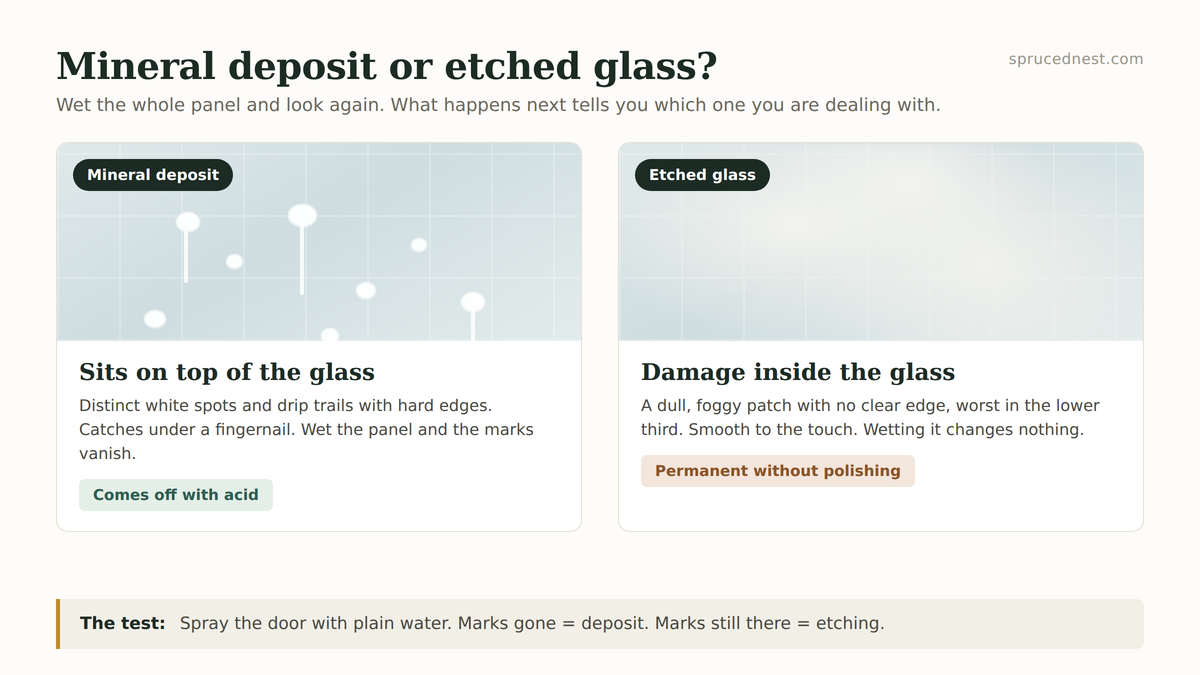
Hard water stains on a glass shower door can seem impossible to shift until you know what they are. That cloudy white haze is mineral buildup, not dirt, and it’s left behind every time water dries on the glass.
A few common myths explain why so many people scrub hard and get nowhere, so they’re worth clearing up first.
Myth vs fact: what really works on hard water stains
Myth: Harder scrubbing removes the haze. Mineral deposits are bonded to the glass, so scrubbing alone barely touches them, and abrasive pads can scratch the surface. A mild acid does the real work by dissolving the minerals.
Myth: Glass cleaner will fix it. Most everyday glass sprays are made for fingerprints and grease. They aren’t designed to dissolve calcium and magnesium deposits.
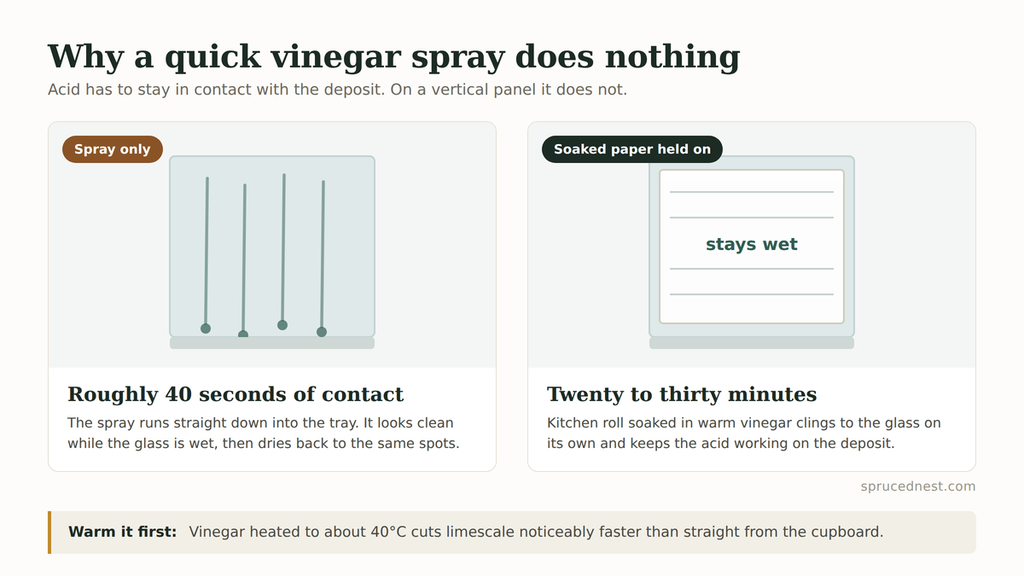
Myth: Vinegar works instantly. Vinegar does work, but it needs time. A quick spray and wipe often does very little, while 15 to 30 minutes of contact time makes the difference.
Myth: All cloudy glass can be cleaned. Some cloudiness is etching, which is permanent damage to the glass surface. No cleaner can reverse it, so check which kind you have before you start.
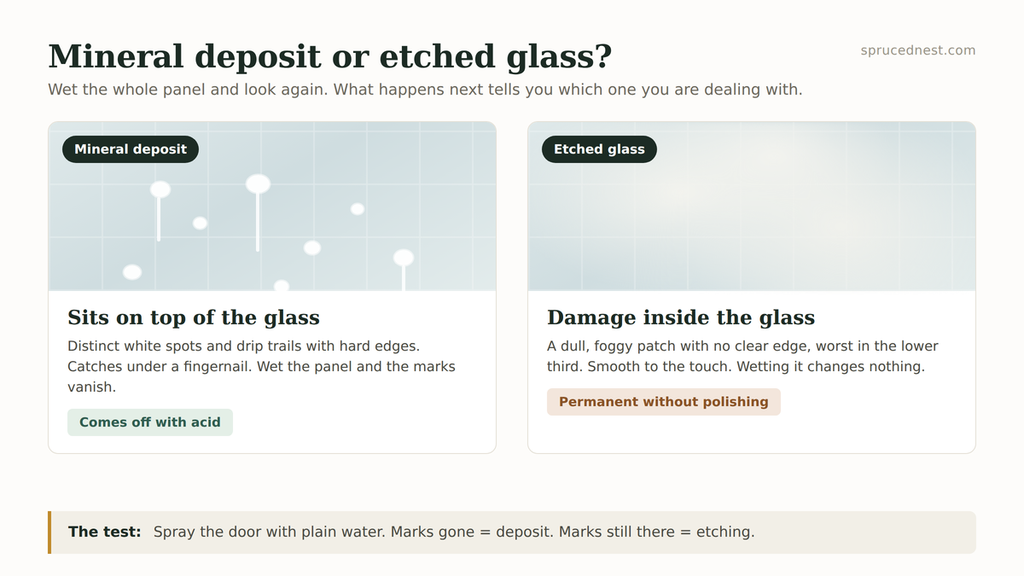
Deposits or etching? Test your hard water stains first
To test, dampen a small area with white vinegar and leave it for a few minutes, then wipe.
If the haze fades, even slightly, you’re dealing with mineral deposits, and those can be removed.
If nothing changes, or the glass still looks frosted and feels rough or pitted when dry, it may be etched. Etching happens when minerals sit on glass for a long time and slowly damage the surface. In that case, cleaning will improve the look a little at best. Professional glass restoration or replacement may be the only fix for severe etching.
Why hard water stains form
Hard water contains dissolved minerals, mainly calcium and magnesium. When shower water evaporates from the glass, the water leaves but the minerals stay. Layer by layer, they build up into that chalky haze.
Penn State Extension explains how hard water forms and how softening works, including the minerals responsible. The harder your local water, the faster the stains return.
How to remove hard water stains from glass shower doors
What you need
- White vinegar
- A spray bottle
- Liquid dish soap
- Baking soda
- A non-scratch sponge
- A squeegee
- A microfiber cloth
- Rubber gloves
Step 1: Warm the vinegar
Warm vinegar works faster than cold. Heat a cup or two in the microwave until it’s warm, not boiling. Pour it carefully into a spray bottle and add a small squeeze of dish soap. The soap helps the solution cling to vertical glass instead of running straight off.
Step 2: Spray and wait
Spray the glass generously, from the top down. Then leave it for 15 to 30 minutes. For thick buildup, press sheets of paper towel onto the wet glass and spray them again. This keeps the vinegar in contact for longer.
Open a window or run the extractor fan while you wait.
Step 3: Scrub with baking soda
Sprinkle baking soda onto a damp non-scratch sponge. Then scrub the glass in small circles. The baking soda adds gentle grit without scratching, and it lifts loosened deposits.
You may notice fizzing where the baking soda meets leftover vinegar. That’s normal.
Step 4: Rinse, squeegee and dry
Rinse the glass with warm water, then squeegee it from top to bottom and dry it with a microfiber cloth. Don’t skip the drying, because any water left on the glass starts the cycle again.
If hazy patches remain, repeat the process, because thick buildup rarely clears in one go. Stubborn hard water stains often need two or three rounds.
For very stubborn hard water stains
If vinegar and baking soda don’t fully work, try these:
- A commercial hard water remover. These are made for bathroom glass and often work faster. Read the label and test a small area first, especially on coated glass.
- A paste of baking soda and vinegar. Leave it on the stain for 15 minutes before scrubbing.
- Lemon juice. It’s another mild acid and can be used the same way as vinegar.
Avoid steel wool and harsh scouring powders on glass. Also avoid razor blades on coated or treated shower glass, since they can strip the coating.
Always use one product at a time. Never mix vinegar or other acids with bleach. The combination produces toxic gas.
Treating different types of shower glass
Shower glass comes in a few types, so check what you have before treating hard water stains.
Clear, untreated glass is the easiest. Vinegar, baking soda and most bathroom glass cleaners are fine on it.
Coated or “easy-clean” glass has a factory treatment that helps water run off. Check the manufacturer’s care guide. Many recommend mild cleaners only, with no abrasive powders, because harsh products can wear the coating away. Once the coating is damaged, hard water stains build up faster than before.
Frosted, patterned or textured glass has a rough surface that traps minerals in tiny grooves. A soft brush works better than a sponge here. Work the solution into the texture, then rinse thoroughly.
Tinted or decorative film on glass can be damaged by strong acids and scrubbing. If your door has a film, use only gentle cleaners on that side.
When you aren’t sure, test a small corner first and wait a day to check for any change.
Don’t forget the frame and tracks
Mineral buildup collects on metal frames and in door tracks too. Use the same vinegar solution on a cloth for frames. For tracks, an old toothbrush works well.
Check the finish first, though. Some metal frames have coatings that can be damaged by acid, so test a hidden spot. The same rules apply to taps; our guide on how to remove limescale from taps and shower heads covers finish safety in detail.
How to prevent hard water stains
Keeping the haze away is much easier than removing it. Most of it comes down to not letting water dry on the glass.
- Squeegee after every shower. It takes about 20 seconds, and it’s the single most effective habit.
- Keep the room ventilated. Run the fan during and after showers, or open a window.
- Use a water-repellent glass treatment. These coatings help water bead and run off, so fewer minerals are left behind. Reapply as the product directs.
- Clean weekly. A quick vinegar spray and wipe stops buildup before it hardens.
- Consider a water softener. In very hard water areas, a whole-house softener reduces the minerals that cause stains.
If the grout needs attention too, our guide to how to clean grout covers it. For streak-free glass elsewhere in the house, see how to clean windows without streaks.
Frequently asked questions
Can vinegar damage a glass shower door?
Vinegar is safe on plain glass, but it can harm natural stone, some metal finishes and certain glass coatings. Keep it off marble and test frames first.
How often should I clean hard water stains?
A weekly light clean is enough for most homes if you squeegee daily. In very hard water areas, you may need a deeper clean every few weeks.
Why do hard water stains come back so fast?
Because every shower leaves new mineral deposits as the water dries. Without a squeegee or water-repellent coating, buildup starts again almost immediately.
Is it etching if the stain won’t come off?
Possibly. If the vinegar test does nothing and the glass feels rough when dry, it’s likely etched. Etching can’t be cleaned away.
Quick summary
Test your hard water stains for etching first. Then spray warm vinegar with a little dish soap, wait 15 to 30 minutes, scrub with baking soda, rinse and dry. After that, a squeegee and a fan will keep the glass clear without much extra work.



Hi, this is a comment.
To get started with moderating, editing, and deleting comments, please visit the Comments screen in the dashboard.
Commenter avatars come from Gravatar.