How to Clean Grout (and Stop It Going Dark Again)
Gray, stained or moldy lines between your tiles? Find your problem in the table, then follow the method to clean grout and seal it so it stays light.

Why does the grout look dirty even after you’ve wiped the tiles? To clean grout properly, you first need to know what’s actually wrong with it, because a gray film, an orange stain and black mold all need different fixes.
Grout is mostly cement and sand. That makes it porous. It soaks up soap scum, body oils, hard water minerals and dye from shampoos, and it stays damp long after the tiles dry. So a quick spray rarely changes much.
Start with the table below. Find the problem that matches your grout, check the likely cause, and jump to the fix. Then follow the full method underneath.
Grout troubleshooting table
| Problem | Likely cause | Fix |
|---|---|---|
| Even gray film all over | Soap scum and body oils in the pores | Baking soda paste and a stiff brush |
| Dark lines near the floor or tub | Dirt, mop water and grime collecting low down | Oxygen bleach soak, then scrub |
| Black or green speckles | Mold growing in damp grout | Detergent scrub; diluted bleach on stubborn spots |
| Pink or orange slime | Bacteria feeding on soap residue | Dish soap scrub, then rinse and dry well |
| White crust or chalky haze | Hard water deposits | Mild acid cleaner, used sparingly |
| Spots that won’t lift at all | Stain set deep, or mold under the surface | Grout pen or regrouting that section |
| Crumbling or missing grout | Age, movement or water damage | Rake out and regrout; cleaning won’t help |
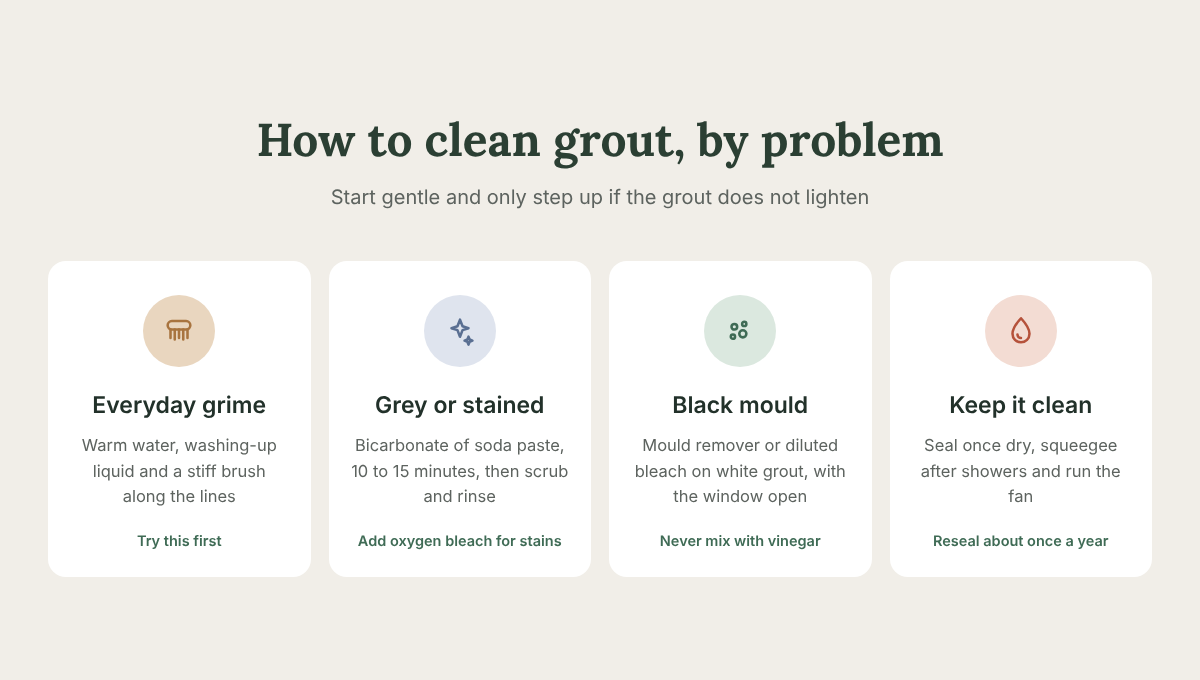
What you need to clean grout
You don’t need much. Most of it is probably under the sink already.
- A stiff brush. A grout brush is best. An old electric toothbrush or a firm nail brush also works.
- Baking soda. Mixed into a paste, it’s mildly abrasive and safe on most grout.
- Oxygen bleach powder. Sodium percarbonate lifts stains without the harsh fumes of chlorine bleach.
- Dish soap. Cuts through greasy films and pink bacteria.
- A spray bottle, a bucket and microfiber cloths.
- Gloves. Grout cleaning means a lot of hand contact with wet cleaner.
Optional: a steam cleaner with a narrow nozzle, and a penetrating grout sealer for the last step.
Method: how to clean grout step by step
Work in small sections, about a square meter at a time. That way the cleaner doesn’t dry before you get to it.
Step 1: Rinse and loosen surface dirt
Spray the area with warm water. Then run the brush along each line to shift loose grime. This first pass makes every product after it work harder.
Step 2: Apply a baking soda paste
Mix three parts baking soda with one part water until it’s like toothpaste. Press it into the grout lines with your finger or the brush.
Leave it for 10 minutes. Then scrub in short, firm strokes along the line, not across it.
For most bathrooms with a general gray film, this step alone is enough to clean grout well.
Step 3: Step up to oxygen bleach for deeper stains
If the lines are still dark, dissolve oxygen bleach powder in hot water, following the pack. Pour or brush it over the grout and leave it for 15 to 30 minutes.
It fizzes gently as it works. After that, scrub again and you should see the color come up.
Oxygen bleach is a good choice for colored grout too, though you should test a hidden corner first.
Step 4: Treat mold separately
For black spots, scrub with detergent and water first. The EPA’s guidance on mold cleanup recommends scrubbing mold off hard surfaces with detergent and water, then drying the area completely.
If stains remain, a diluted chlorine bleach solution can lighten them. Open a window, wear gloves and rinse well afterward.
Never mix bleach with vinegar, ammonia or other cleaners. The combination releases toxic gas.
If the mold sits in the silicone around the tub rather than the grout, see our guide on how to remove black mold from silicone sealant, since that needs a different approach.
Step 5: Rinse thoroughly
Leftover cleaner attracts dirt. So wipe the lines with clean water two or three times, wringing the cloth out each time.
Step 6: Dry it fast
Run the fan, open the window or wipe with a dry microfiber cloth. Damp grout is where mold starts, so getting it dry matters as much as the scrubbing.
Can you clean grout with vinegar?
You can, but it’s not the best tool for the job.
Vinegar is an acid. Used often, it slowly wears away cement-based grout and can etch natural stone such as marble, travertine and limestone. On those surfaces, skip it completely.
Where vinegar does help is on white hard water crust. Use a diluted mix, leave it for a few minutes, scrub and rinse well. For more on mineral buildup, our guide to removing hard water stains from a shower door covers the same deposits on glass.
Using a steam cleaner to clean grout
A steam cleaner with a small jet nozzle is excellent on floor grout. Heat and pressure lift grime from the pores without any chemicals.
Hold the nozzle close and move slowly along each line. Then wipe up the loosened dirt straight away, before it settles back in.
Avoid steam on unsealed natural stone or old, cracked grout, as it can push water underneath the tiles.
When cleaning isn’t enough
Sometimes grout is stained right through. Other times it’s crumbling, cracked or missing in places.
In those cases, two options make sense:
- Grout pen or colorant. It paints over sound but stained grout and gives it a uniform finish. Clean and dry the lines first.
- Regrouting. Rake out the old grout from damaged sections with a grout saw and fill with new grout. Small areas are a manageable DIY job.
If water is getting behind the tiles, fix that first. New grout over a leak won’t last.
Mistakes that make it harder to clean grout
A few habits undo all that scrubbing. Watch out for these:
- Using a wire brush. Metal bristles scratch tiles and gouge the grout, which gives dirt more places to settle.
- Scrubbing across the line. Brushing along the joint is gentler and reaches deeper into the pores.
- Letting cleaner dry on. Dried residue turns sticky and holds new dirt, so you’ll need to clean grout again sooner.
- Mopping with dirty water. Floor grout often goes dark simply because a mop spreads gray water into the joints. Change the water often.
- Skipping the rinse. If you clean grout but leave soap behind, the film comes straight back.
Seal it so it stays clean
Once you clean grout and it has dried fully, sealing is the step that keeps it light. A penetrating sealer soaks into the pores so dirt and water sit on top instead of soaking in.
Let the grout dry for at least a day before sealing, and longer in a humid bathroom. Apply the sealer with a small brush along the lines and wipe any excess off the tiles before it dries.
Check the product label for how often to reapply. A simple test is to drip water on the grout. If it darkens straight away instead of beading, it’s time to reseal.
Epoxy grout is the exception. It isn’t porous, so it doesn’t need sealing.
A quick routine to keep grout clean
- After every shower: squeegee the tiles and leave the fan running for 15 minutes.
- Weekly: spray with diluted dish soap, brush the lines lightly and rinse.
- Monthly: a baking soda scrub on the darkest areas, usually the floor and the lowest rows.
- Yearly: test the sealer and reapply if water soaks in.
That’s far less work than a full deep clean every few months.
Frequently asked questions
What is the best homemade way to clean grout?
A paste of baking soda and water, scrubbed in with a stiff brush, handles most everyday grime. For deeper stains, an oxygen bleach soak works better than any kitchen ingredient.
How long should you leave cleaner on grout?
About 10 minutes for a baking soda paste and 15 to 30 minutes for oxygen bleach. Don’t let either dry out completely on the surface.
Is bleach safe to clean grout?
Diluted chlorine bleach can lighten mold stains, but use it with good ventilation and gloves, and rinse it off well. Never mix it with vinegar or ammonia. It may also fade colored grout.
How often should you clean grout?
A light brush with soapy water once a week stops buildup. A deeper clean every one to three months is enough for most bathrooms and kitchens.