How to Clean a Mattress: Stains, Smells and Dust Mites
How to clean a mattress, with a stain-by-stain table for sweat, urine, blood and spills, and a deep-clean routine that freshens it and keeps dust mites down.
Swapping to heavier fall bedding? It’s the perfect moment to clean a mattress, because it’s already bare and you can see exactly what you’re dealing with.
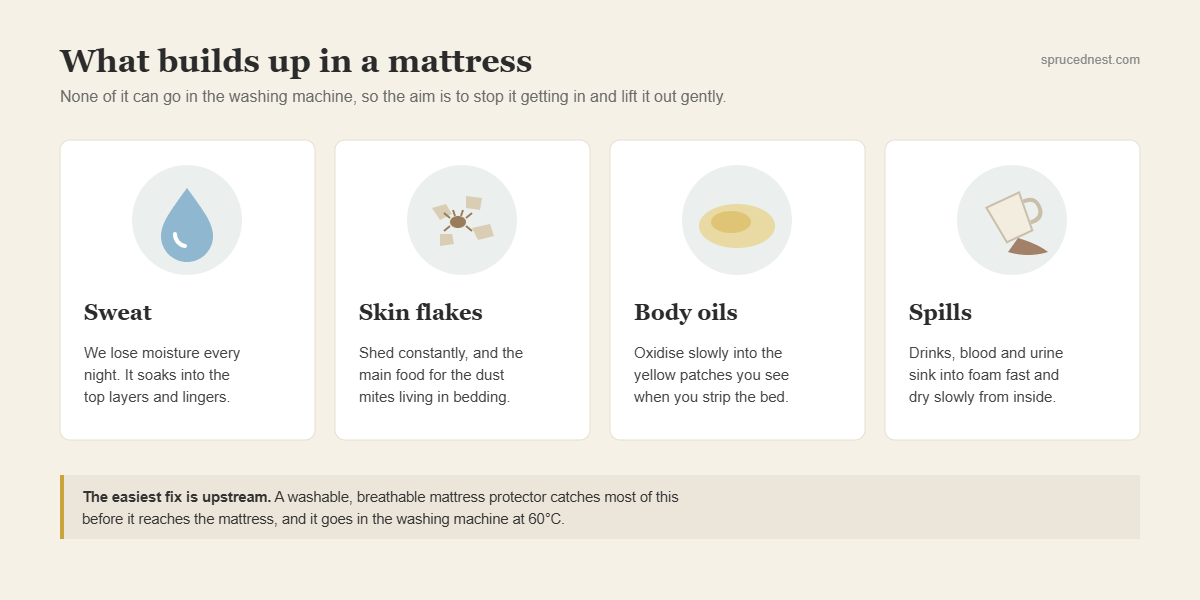
A mattress collects sweat, skin flakes, spills and the occasional accident. Most of that sinks below the surface, where a quick wipe can’t reach it. The good news is that a few household basics handle nearly every stain. The key is matching the right method to the right mark, and using as little liquid as possible.
Below, you’ll find a stain-by-stain table, then a full routine that freshens the whole mattress and keeps dust mites down.
Before you clean a mattress: three ground rules
A mattress is far slower to dry than a load of laundry. Moisture that soaks deep into the foam or fibers can take days to leave, and a damp core can turn musty or grow mold. So keep these rules in mind for every stain.
- Blot, don’t rub. Rubbing pushes the stain deeper and roughs up the fabric.
- Use the least liquid that works. Mist or dab solutions on. Never pour.
- Test first. Try any cleaner on a hidden spot, such as the side near the bottom, and wait for it to dry.
Also, check the manufacturer’s care instructions. Some memory foam and hybrid mattresses have specific advice about which products are safe, and ignoring it can affect the warranty.
How to clean a mattress stain by stain
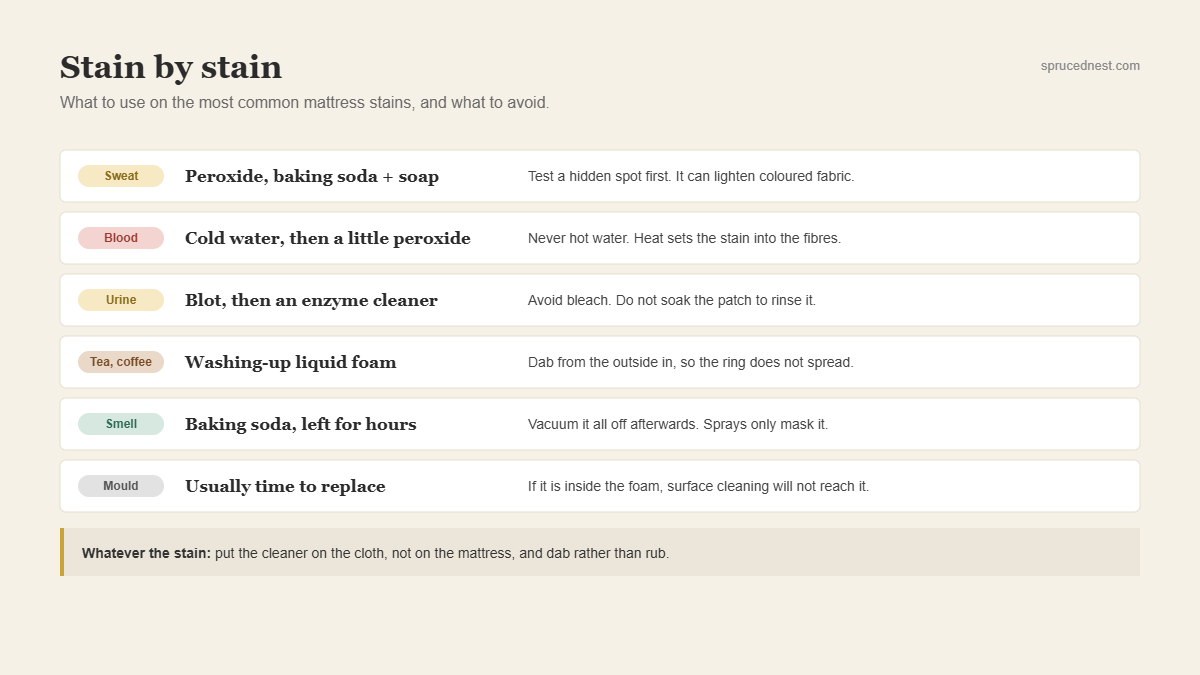
Use this table to match the mark to the method. Every method assumes you’ve blotted up any wet residue first.
| Stain | What to use | How |
|---|---|---|
| Sweat or yellow marks | 3% hydrogen peroxide, baking soda, a drop of dish soap | Mix a thin paste, spread it lightly, leave 30 minutes, then wipe off with a damp cloth |
| Urine | Enzyme cleaner (or equal parts white vinegar and water) | Blot well, spray lightly, leave as directed, blot again, then cover with baking soda once dry |
| Fresh blood | Cold water, then a little dish soap | Dab with cold water only; hot water sets blood. Use soap on a cloth and blot |
| Dried blood | 3% hydrogen peroxide or an enzyme cleaner | Dab on, let it foam, blot. Repeat until the mark fades |
| Vomit | Enzyme cleaner and baking soda | Remove solids, blot, apply enzyme cleaner, let dry, then cover with baking soda overnight |
| Coffee, tea or juice | Dish soap in cool water | Blot with the soapy cloth, then with a clean damp cloth. Follow with a vinegar mist if a shadow remains |
| Makeup or oily marks | Dish soap solution | Work a few drops into the mark with a cloth, then blot clean |
| Mold or mildew spots | Not a DIY job if it’s inside | Surface spots may lift, but mold that has spread into the core usually means replacing the mattress |
A few safety notes apply here. Hydrogen peroxide can lighten colored fabric, so test it first. Never mix cleaners together in the same spot, and in particular never combine bleach with vinegar or ammonia. Bleach isn’t needed for any of these stains anyway.
A note on pet accidents
Pet urine needs an enzyme cleaner, because the smell can linger even after the stain disappears. Animals may return to a spot that still smells to them. The same products help on floors too, and our guide to removing pet urine smell from carpet explains how they work.
What not to use on a mattress
Some popular tricks to clean a mattress do more harm than good. Avoid these:
- Steam cleaners on memory foam. Heat and moisture can damage the foam and leave it damp inside. Check the label before using steam on any mattress.
- Carpet shampoo machines. They push far too much water into the layers.
- Bleach. It can weaken fibers, discolor fabric and give off harsh fumes in a closed bedroom.
- Strong fragrance sprays. They hide smells for a day but don’t remove the cause. Some can also irritate skin or breathing.
- A hair dryer on high heat. It may scorch fabric or warp foam. A fan and an open window dry spots more safely.
Mattress types: what changes
Most of the advice on how to clean a mattress applies to every type. Still, a few details depend on what’s inside.
Memory foam. Foam soaks up liquid like a sponge and dries slowly. Use the lightest possible mist and blot hard. Air the room well afterward.
Innerspring. These handle a little more moisture, but the padding on top still holds water. Keep the springs dry, because damp metal can rust over time.
Latex and hybrid. Follow the maker’s advice closely. Some latex reacts badly to certain solvents, so stick to mild dish soap and enzyme cleaners.
Pillow-top. The soft top layer traps sweat and dust. Vacuum it slowly, and treat it like memory foam when spot cleaning.
A full routine to clean a mattress
Use this routine every few months, or whenever the mattress needs more than a spot treatment. Set aside an afternoon, since the baking soda works best given time.
Step 1: Strip and wash the bedding
Take off everything, including the mattress protector. Wash sheets and pillowcases on the warmest setting the labels allow.
Step 2: Vacuum thoroughly
Use the upholstery attachment and go slowly. Pay attention to seams, piping and the edges, where skin flakes and dust collect. If you have one, a crevice tool helps along the stitching.
Step 3: Treat the stains
Work through any marks using the table above. Then let the treated spots dry before the next step.
Step 4: Deodorize with baking soda
Sift a thin, even layer of baking soda across the whole surface. A small kitchen sieve makes this easy. Leave it for several hours, or all day if you can. Open a window or let in sunlight to help the mattress air out.
Step 5: Vacuum again
Remove all the baking soda with the upholstery tool. Go over the surface twice, since leftover powder can feel gritty under a sheet.
Step 6: Flip or rotate
Rotate the mattress head to foot. If it’s a two-sided design, flip it too. Many modern mattresses are one-sided, so check the label before you turn it over.
Step 7: Add a protector
A washable, waterproof protector means you rarely need to clean a mattress deeply. It catches spills and sweat before they reach the foam, and it goes straight in the washing machine.
How to clean a mattress for dust mites
Dust mites are a big reason to clean a mattress regularly. They live in bedding and feed on the skin flakes people shed. You can’t remove every one, but you can keep their numbers down.
- Wash sheets and pillowcases weekly in hot water.
- Vacuum the mattress regularly with a HEPA-filter vacuum.
- Use zippered, allergen-proof covers on the mattress and pillows.
- Keep bedroom humidity moderate, since mites thrive in damp air.
MedlinePlus, from the US National Library of Medicine, has practical tips on reducing dust and dust mites at home. For the rest of the bedroom, our plan to reduce dust at home covers curtains, floors and closets.
How often should you clean a mattress?
A rough schedule keeps the job manageable:
| Task | How often |
|---|---|
| Wash bedding | Weekly |
| Wash the mattress protector | Every 1 to 2 months |
| Vacuum the mattress | Monthly |
| Baking soda deep clean | Every 3 to 6 months |
| Rotate or flip | Every 3 to 6 months |
People with allergies, pets on the bed or night sweats may want to vacuum and wash more often.
When cleaning isn’t enough
Some problems don’t come out, however carefully you clean a mattress. If you notice sagging, lumps, a smell that returns soon after cleaning, or mold inside the mattress, it’s probably time to replace it.
Your next step: strip the bed this weekend, vacuum it, and see what’s there. Then treat each mark with the method from the table, finish with baking soda, and add a protector before the clean sheets go back on.