How to Reduce Dust in Your Home: A Room-by-Room Plan
A room-by-room plan to reduce dust at home by tackling the sources first, from entryway mats and bedding to kitchen grease and HVAC filters.
Want to reduce dust in your home, but the shelves look gray again a few days after you clean? You’re not doing it wrong. You’re just treating the surfaces and not the sources.
Dust is constantly being made and carried in. If you only wipe it away, it keeps coming back at the same pace. The fix is a plan that tackles each room for what it actually produces, so there’s simply less to clean.
This guide works through the house one room at a time. Start with the rules that apply everywhere, then pick the rooms that bother you most.
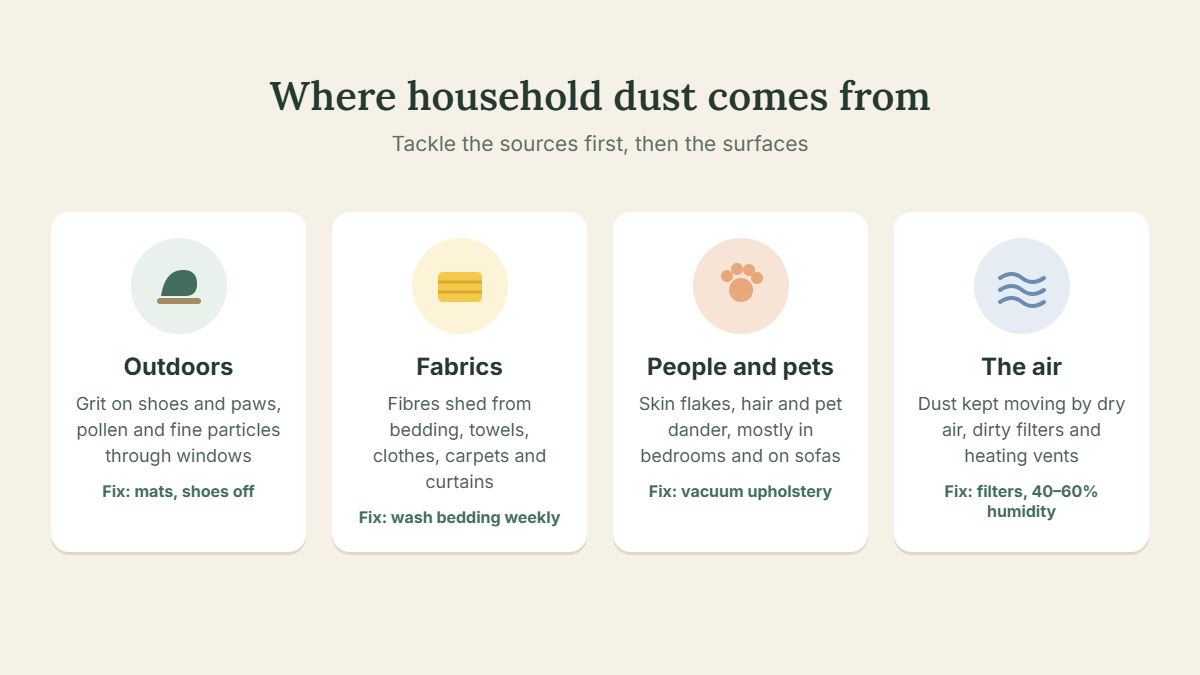
Where household dust comes from
Indoor dust is a mix, not a single thing. A typical sample includes:
- Soil and grit tracked in on shoes
- Pollen and outdoor particles that drift through doors and windows
- Fibers shed by carpets, towels, bedding and clothes
- Tiny flakes of skin, plus pet dander and hair
- Crumbs, paper fibers and general household debris
Some rooms make more of one type than another. Bedrooms shed fabric fibers. Entryways collect grit. Kitchens turn airborne dust sticky with grease. That’s why one routine for the whole house rarely works.
If you’d like to understand what else is floating around in indoor air, the EPA has a clear overview of indoor pollutants and their sources.
Three rules to reduce dust in every room
Before you start on individual rooms, get these habits right. They make every other step work better.
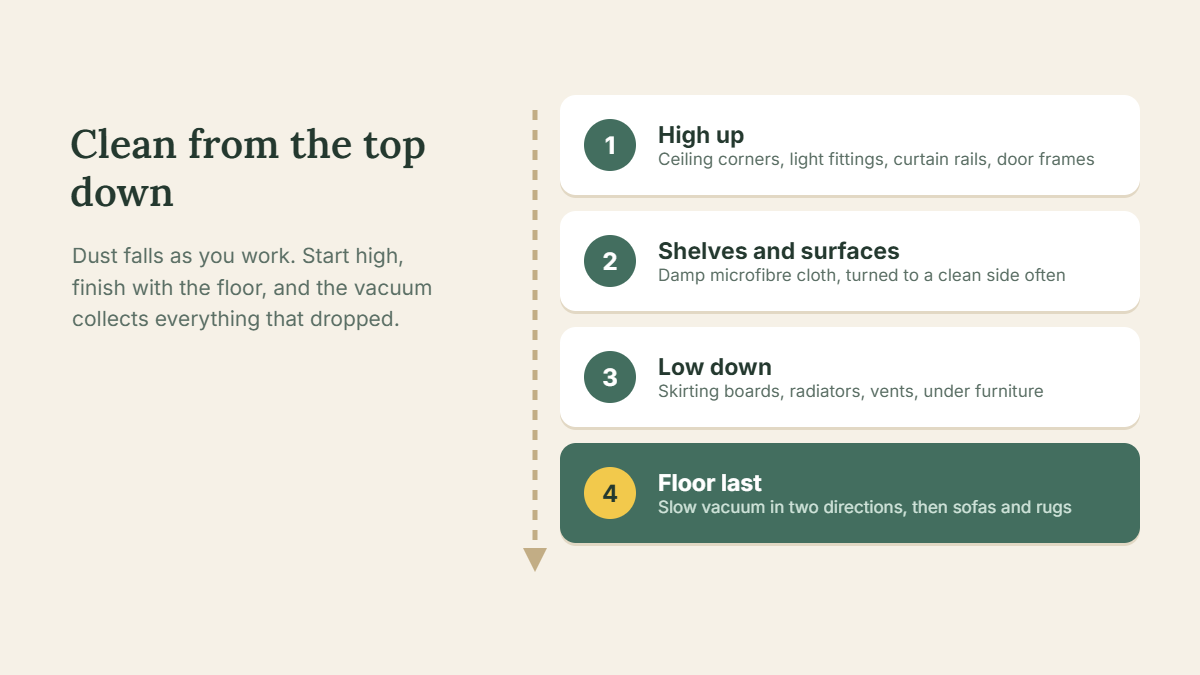
1. Use a damp microfiber cloth. Dry cloths and feather dusters mostly flick dust into the air. It then settles again an hour later. A lightly damp microfiber cloth traps it instead. Wring it out well, especially near electronics.
2. Work from the top down. Dust falls as you clean. Start with ceiling fans, door frames and the tops of shelves. Then move to tables and windowsills, and finish with the floor.
3. Vacuum last, with a filter that holds the dust. A vacuum with a sealed HEPA filter keeps fine particles inside the machine. Empty it outdoors if you can, and wash or replace filters as the manufacturer suggests.
A room-by-room plan to reduce dust
Entryway: stop it at the door
Most outdoor dust walks in. That makes the front door your best chance to cut the total.
- Put a coarse mat outside and a soft, absorbent mat inside.
- Shake or vacuum both mats weekly.
- Make it easy to take shoes off, with a bench and a shoe rack.
- Wipe the floor just inside the door more often than the rest of the hall.
If space is tight, our ideas for storage in a narrow entryway help you fit a shoe rack in.
Living room: reduce dust in soft furnishings
Sofas, rugs, cushions and curtains both shed fibers and trap dust. Vacuum upholstery with the brush attachment every week or two. Beat cushions outside now and then.
Wash curtains or throws according to their care labels a few times a year. Heavy drapes hold more dust than blinds, so consider lighter fabrics if dust is a big problem.
Next, look at the small things. Ornaments, piles of magazines and open shelves full of objects are hard to clean. As a result, people tend to dust around them. Fewer items on display means faster, more thorough cleaning.
Bedroom: reduce dust from bedding
Bedding sheds fibers every night. You also leave skin flakes behind, which feed dust mites.
- Wash sheets and pillowcases weekly, on the warmest setting the label allows.
- Vacuum the mattress and under the bed regularly.
- Keep clothes in closets or drawers rather than on chairs.
- Store spare bedding in closed bags or boxes.
For a deeper clean, follow our steps on how to clean a mattress, including stains and smells.
Kitchen: where dust turns sticky
Cooking puts tiny droplets of grease into the air. These catch dust and form a tacky film, especially on top of cabinets and the fridge.
Wipe those high surfaces monthly with warm water and a little dish soap. Clean or replace the range hood filter on schedule. Lining the tops of tall cabinets with paper saves effort, because you can swap the paper instead of scrubbing.
Bathroom: lint and fan grilles
Towels shed a surprising amount of lint. Shake them outside before washing, and don’t dry them in the bathroom if you can avoid it.
The extractor fan grille collects a gray fuzz that blows back into the room. Switch the fan off, then vacuum the grille with a brush attachment every month or so.
Home office: electronics and paper
Screens and computers attract dust through static. Wipe them with a dry microfiber cloth made for screens, following the manufacturer’s advice. Use a soft brush on keyboards and vents.
Paper also sheds fibers. File it away rather than leaving open stacks on the desk.
Homes with pets
Pet hair and dander add to the dust in every room. Brush your pet outdoors when the weather allows. Wash their bedding regularly, and vacuum the spots where they like to lie.
For stubborn fur on fabric, see our tips to remove pet hair from carpets, sofas and clothes.
Look after the air to reduce dust further
If your home has central heating or air conditioning, check the filter. A clogged filter can’t do its job, so change it as often as the manufacturer recommends.
A portable air purifier with a true HEPA filter can help in the room you use most, such as a bedroom. Choose one sized for that room and keep the door closed while it runs.
Finally, think about humidity. Very dry air lets dust float around more easily. Very damp air, on the other hand, encourages dust mites and mold. Somewhere in the middle is best for most homes.
Mistakes that make it harder to reduce dust
A few common habits quietly undo your effort. Check whether any of these sound familiar.
- Dusting after vacuuming. The dust you knock down lands on a clean floor. Always vacuum last.
- Using a vacuum with a full bag or dirty filter. Suction drops, and fine particles can blow out of the exhaust.
- Spraying polish straight onto furniture. Heavy polish leaves a sticky layer that grabs dust. Spray the cloth lightly instead, or skip it.
- Ignoring the high places. Ceiling fans, door frames and the tops of wardrobes drop dust onto everything below.
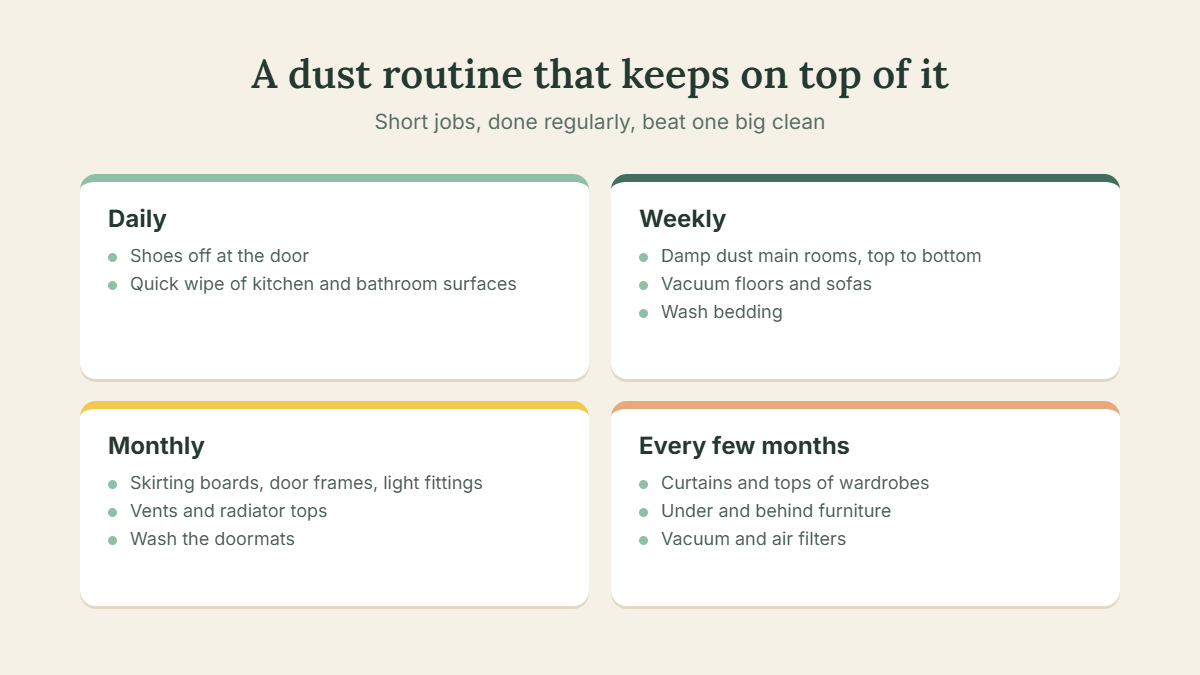
- Cleaning the whole house once a month. Long gaps let dust build up and spread. Short, regular sessions keep the total low.
Fixing just one or two of these often makes a bigger difference than buying new cleaning products.
Frequently asked questions
Why does my house get so dusty so quickly?
Usually there’s a steady source you haven’t tackled yet. Common culprits are shoes worn indoors, dry dusting that just moves dust around, an old HVAC filter, or a lot of fabric in one room.
Does opening windows reduce dust?
It depends. Fresh air helps clear stale indoor air. However, on windy or high-pollen days, open windows let more outdoor particles in. Ventilate in short bursts and close windows on dusty days.
Do air purifiers really help?
A purifier with a true HEPA filter can cut airborne particles in one room. It won’t remove dust that has already settled, so you still need to clean surfaces.
How often should I dust?
Weekly works for most homes. Busy rooms, homes with pets, and anyone with allergies may need to tackle the main surfaces twice a week.
Your checklist to reduce dust
Pin this somewhere handy and work through it each week.
- Shake out the entryway mats
- Damp-dust from the top of each room down
- Vacuum floors and upholstery with a HEPA vacuum
- Wash bedding on a warm cycle
- Wipe one high surface, such as cabinet tops
- Check the HVAC or purifier filter once a month
Do the sources first, then the surfaces. You’ll notice the difference within a couple of weeks.