Why Your Washing Machine Smells, and How to Actually Fix It
Why washing machine smells develop, the six usual causes and the fix for each, plus a simple monthly maintenance routine.
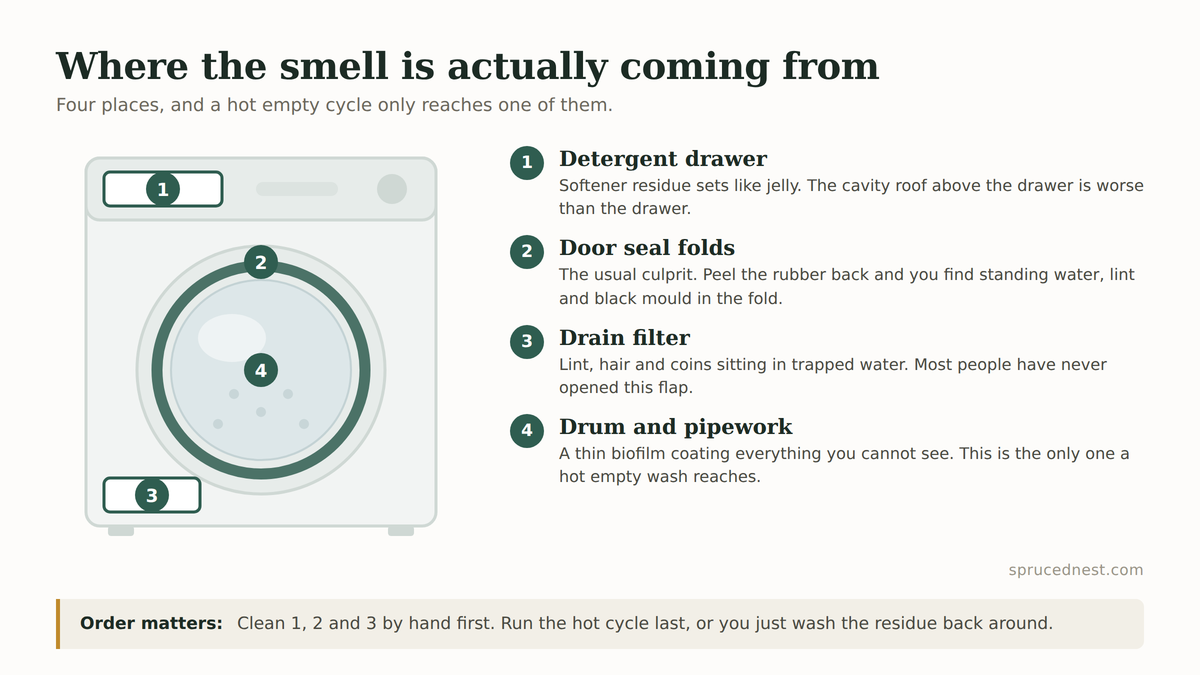
Washing machine smells are almost never a sign that the machine is broken. They’re a sign that something inside it is staying wet and dirty between washes. Fix that, and the smell goes.
The tricky part is finding where it’s coming from. A washer has several hidden spots that trap water, lint and leftover detergent. Each one needs a slightly different fix, so this guide takes them one at a time.
Where washing machine smells come from
The musty, damp-dog odor comes from bacteria and mold growing on residue. Residue is a mix of detergent, fabric softener, skin cells, lint and dirt. Add warmth and moisture, and you’ve got ideal growing conditions.
Modern habits make it worse, and that’s why washing machine smells are so common in newer homes. Cooler, shorter cycles save energy, which is great. However, they don’t always rinse residue away as well as hotter washes. Over time, a layer builds up in places you never see.
How to find the source in five minutes
Before you clean everything, do a quick sniff test. It tells you where to focus first.
- Open the door and smell the seal. If the odor is strongest here, start with Cause 1.
- Pull out the detergent drawer. A sour or musty smell inside the housing points to Cause 2.
- Check the water from the filter. If it’s dark, slimy or foul, the filter needs attention.
- Smell a freshly washed towel. If clean laundry smells damp, residue in the drum is the likely problem.
Most of the time, it’s more than one spot. Still, knowing where the washing machine smells strongest helps you tackle the worst source first, which makes the biggest difference quickly.
Also note when the smell appears. An odor that hits you as soon as you open the door usually comes from the seal or drum. A smell that only shows up during a cycle may come from the drain or standpipe.
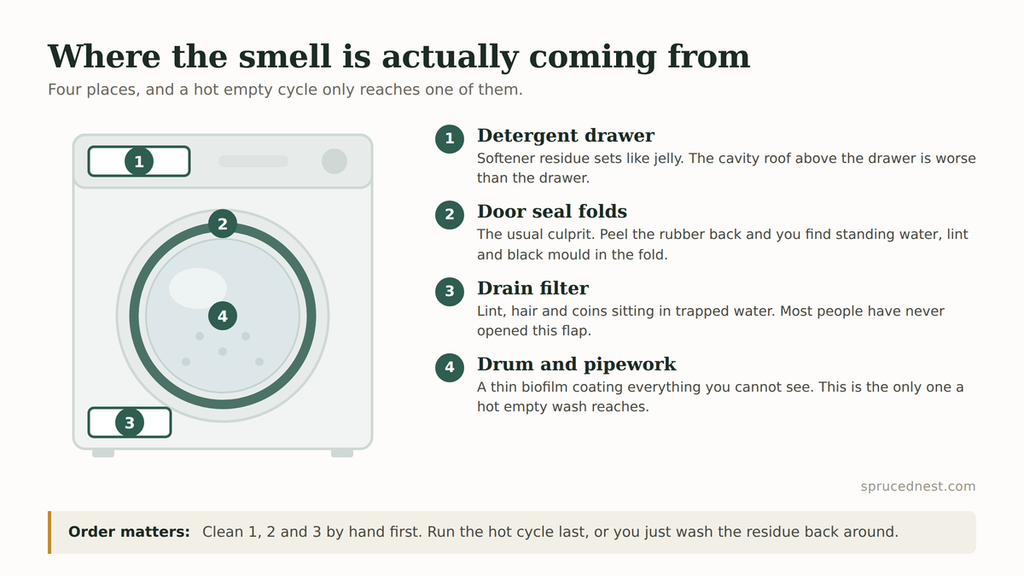
Cause 1: Washing machine smells from the door seal
Why it smells: On a front loader, the rubber gasket around the door holds water in its folds. Lint, hair and detergent collect there and stay damp.
The fix: Pull back the folds and wipe them out with a cloth and warm, soapy water. Look carefully at the bottom of the seal, where water pools. For dark spots, use a cleaner made for washing machines, or a diluted bleach solution if the manufacturer allows it. Rinse well afterward.
Then dry the seal with a towel. Because the seal is the number one source of odor, this one habit fixes many cases where a washing machine smells. Leaving it wet undoes half the work.
Cause 2: Washing machine smells from the detergent drawer
Why it smells: Detergent and softener don’t always rinse through fully. The leftovers turn into a sticky film, and that film grows mold in the drawer and the cavity behind it.
The fix: Pull the drawer out completely. Most have a release tab. Soak it in hot, soapy water, then scrub it with an old toothbrush. Don’t forget the housing the drawer slides into. Shine a flashlight inside, because that’s often where the worst of it hides.
Cause 3: Washing machine smells from the drain pump filter
Why it smells: Many front loaders have a small filter behind a panel at the bottom front. It catches coins, hair, lint and grit. Eventually, trapped debris starts to rot.
The fix: Put down a towel and a shallow tray first, since water will come out. Then open the panel, slowly unscrew the filter, and let the water drain. Clean the filter under the tap and refit it securely. Check your manual, because the steps vary by model.
Cause 4: Too much detergent or softener
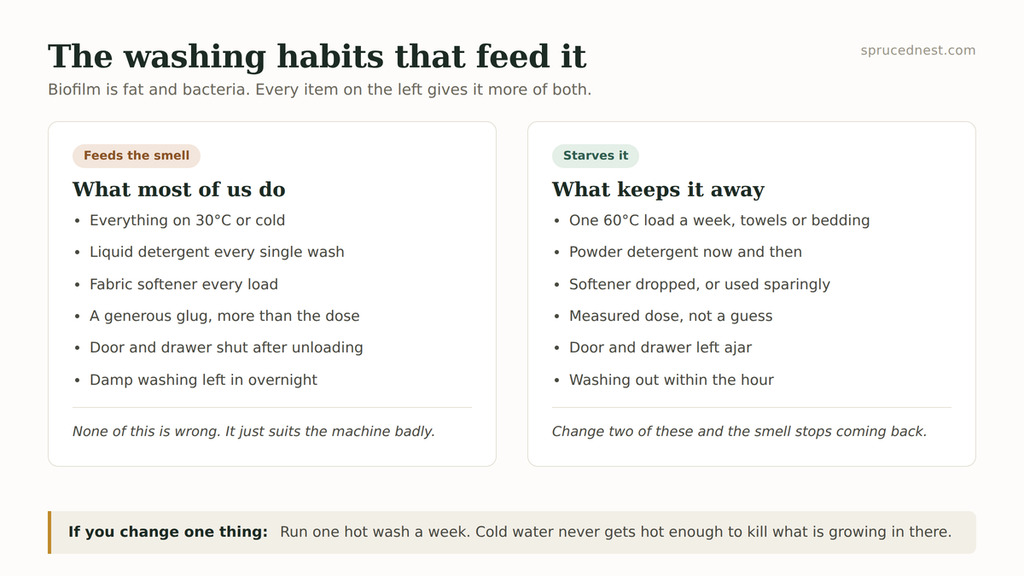
Why it smells: More detergent doesn’t mean cleaner clothes. Instead, the extra lingers as residue, and residue feeds odor. Fabric softener is especially prone to building up.
The fix: Measure detergent according to the pack and your load size. Cut back on softener, or skip it for towels and sports gear. If your washing machine smells soon after every wash, overdosing is a likely reason.
Cause 5: The door stays shut between washes
Why it smells: A closed door traps moisture in the drum. As a result, damp air and wet surfaces sit there for hours or days.
The fix: Leave the door and the detergent drawer slightly open after each wash, so the inside can dry. If you have small children or pets, make sure they can’t climb in, and close it once it’s dry.
Cause 6: Wet laundry left in the drum
Why it smells: Clothes left sitting wet start to smell quickly, and that odor transfers to the drum.
The fix: Unload as soon as the cycle ends. If you can’t, use the delay timer so the wash finishes when you’re home. Our tips to dry clothes indoors without damp help once the load is out, too.
How to deep clean when your washing machine smells
If washing machine smells are already strong, start with a deep clean. Do this first, then move to the maintenance routine below.
- Clean the door seal, detergent drawer and filter as described above.
- Run the hottest, longest empty cycle your machine offers.
- Add a washing machine cleaner, following the product instructions. Alternatively, use the machine’s own drum-clean or tub-clean program if it has one.
- Leave the door open afterward so it dries fully.
Use one product at a time. Never mix bleach with vinegar, ammonia or other cleaners, because the fumes are dangerous. If you’ve used bleach, run a rinse cycle before trying anything else.
For more detail, Consumer Reports has a practical guide on how to clean your washing machine, including tips for front and top loaders.
When a top loader washing machine smells
Top loaders don’t have a door seal. Even so, residue builds up under the rim, on the agitator, and on the outer side of the drum.
Wipe under the rim and around the lid regularly. Run a hot cleaning cycle every month or so. Leave the lid open after washing, just as you would with a front loader.
If your top loader has a removable agitator or a lint trap, take those out every few months and clean underneath. Grime can collect in places the water never reaches during a normal cycle, and that’s often where a lingering odor starts.
What else might cause washing machine smells
If the smell persists after all of this, check a couple of less common causes:
- A slow or blocked drain. Water that sits in the drain hose can smell. Make sure the hose isn’t kinked.
- The standpipe or sink drain. Sometimes the smell is coming from the household drain, not the machine.
- Very hard water. Mineral buildup can trap residue. A descaling product designed for washers can help.
- Dirty pet bedding. Hairy, smelly loads leave more debris behind. Our guide on how to wash a dog bed has tips to keep your machine cleaner.
Mold isn’t limited to the laundry, of course. If the bathroom has the same problem, here’s how to remove black mold from silicone sealant.
Your monthly maintenance routine
Once the smell is gone, this simple routine keeps it gone. Most of it takes a few minutes.
| How often | Task | Time needed |
|---|---|---|
| After every wash | Leave the door and drawer ajar, unload promptly | Seconds |
| Weekly | Wipe the door seal and dry it | 2 minutes |
| Monthly | Clean the detergent drawer and housing | 10 minutes |
| Monthly | Run a hot empty cycle with washer cleaner | 1 to 2 hours, hands-free |
| Every 1 to 3 months | Clean the drain pump filter | 10 minutes |
| Ongoing | Use the right dose of detergent | No extra time |
Put the monthly tasks on your calendar. Washing machine smells come back slowly, so a routine is far easier than another big clean.



One comment