How to Stop Condensation on Windows (and the Mold That Follows)
Match the cause of condensation on windows to the right fix, then try quick wins this week and plan the long-term changes that keep mold away.
Condensation on windows isn’t a window problem. It’s a sign that the air inside your home holds more moisture than it can keep, and the glass is simply where it shows up first.
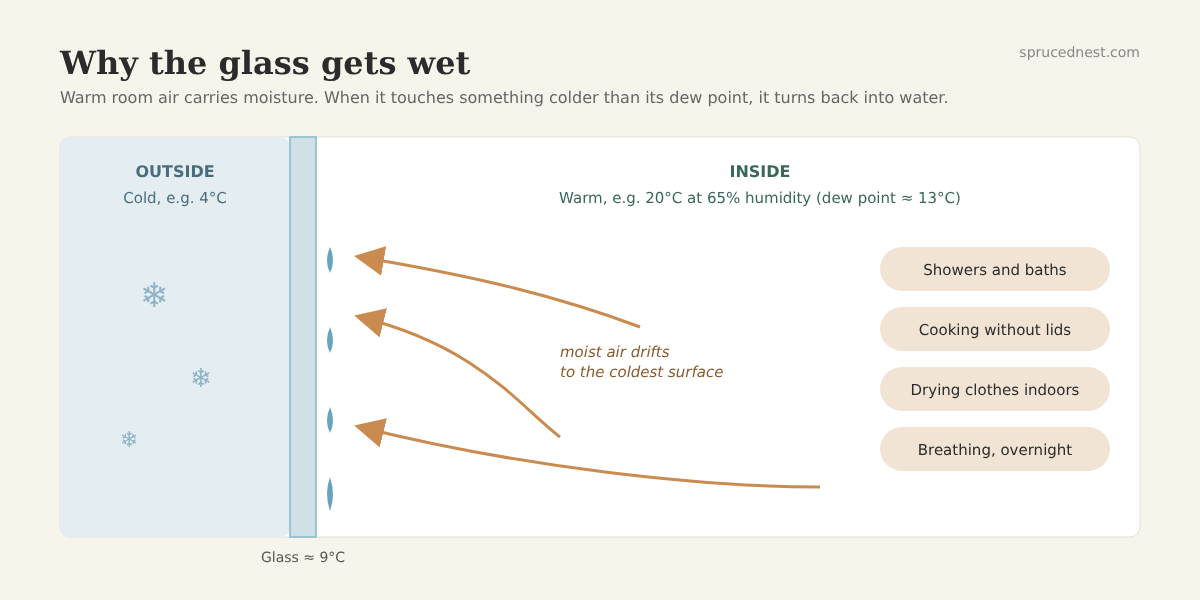
Glass is usually the coldest surface in a room. When warm, damp air touches it, the air cools and drops its water as droplets. A little on a frosty morning is normal. However, if your windows stream every day, or the frames and sills stay wet, the moisture is likely settling in other cold spots too. That’s when black mold starts to appear on seals, curtains and corners.
This guide starts with a cause-and-fix table, so you can match what’s happening in your home to the right solution. After that, you’ll find quick wins for this week and longer-term fixes worth planning for.
What causes condensation on windows?
Two things combine to create it: moisture in the air and a cold surface. Everyday life adds a lot of that moisture. Cooking, showers, laundry and even breathing all release water vapor.
Ventilation then decides where that vapor goes. If it can escape outside, the air stays drier. If it can’t, it builds up and condenses on the first cold thing it meets. That’s why sealed, draft-proofed homes can actually struggle more in winter, unless they also have good ventilation.
The US Environmental Protection Agency’s guide to mold and moisture explains the link between excess indoor moisture and mold growth, and why controlling humidity matters.
Why condensation on windows is worse in winter
Cold weather makes the glass much colder than the room. At the same time, people keep windows closed, cook more hot meals and dry more laundry inside. So the air gets wetter just as the surfaces get colder.
Bedrooms often suffer most. Two people sleeping in a closed room add moisture all night, and the heating usually drops at the same time. By morning, the glass is cold and the air is damp, which is a perfect setup for droplets.
Is condensation on windows a problem?
A light mist on a cold morning that clears within an hour is nothing to worry about. On the other hand, it’s worth acting if you notice:
- Water pooling on sills or running down the wall
- Black spots on seals, frames or nearby curtains
- Peeling paint or swollen wood around the window
- A musty smell in the room
- Condensation that lasts most of the day
These signs suggest that moisture is building up faster than it can escape. Left alone, it can damage paint, plaster and wooden frames over time.
Cause and fix: match your problem to the solution
Start by spotting which rooms and which times of day have the worst condensation on windows. Then use this table.
| Cause | Where you notice it | Fix |
|---|---|---|
| Cooking steam | Kitchen windows, especially in the evening | Use pan lids and run a range hood that vents outside |
| Showers and baths | Bathroom windows and mirrors | Run the fan during the shower and for 15 to 20 minutes after; keep the door shut |
| Drying laundry indoors | The room with the airer | Dry in one room with the door closed and a dehumidifier or open window |
| Breathing overnight | Bedroom windows each morning | Leave a trickle vent or window slightly open; keep the bedroom door ajar |
| Cold, single-pane glass | Every window, worst in winter | Add secondary glazing or window insulation film; plan for double glazing |
| Uneven heating | Rooms you rarely heat | Keep a steady, low background temperature rather than short blasts |
| Closed or blocked vents | Rooms with trickle vents shut | Open vents and clear dust from them |
| Curtains or furniture against the glass | Behind heavy drapes and blinds | Open curtains in the day; leave a gap between furniture and outside walls |
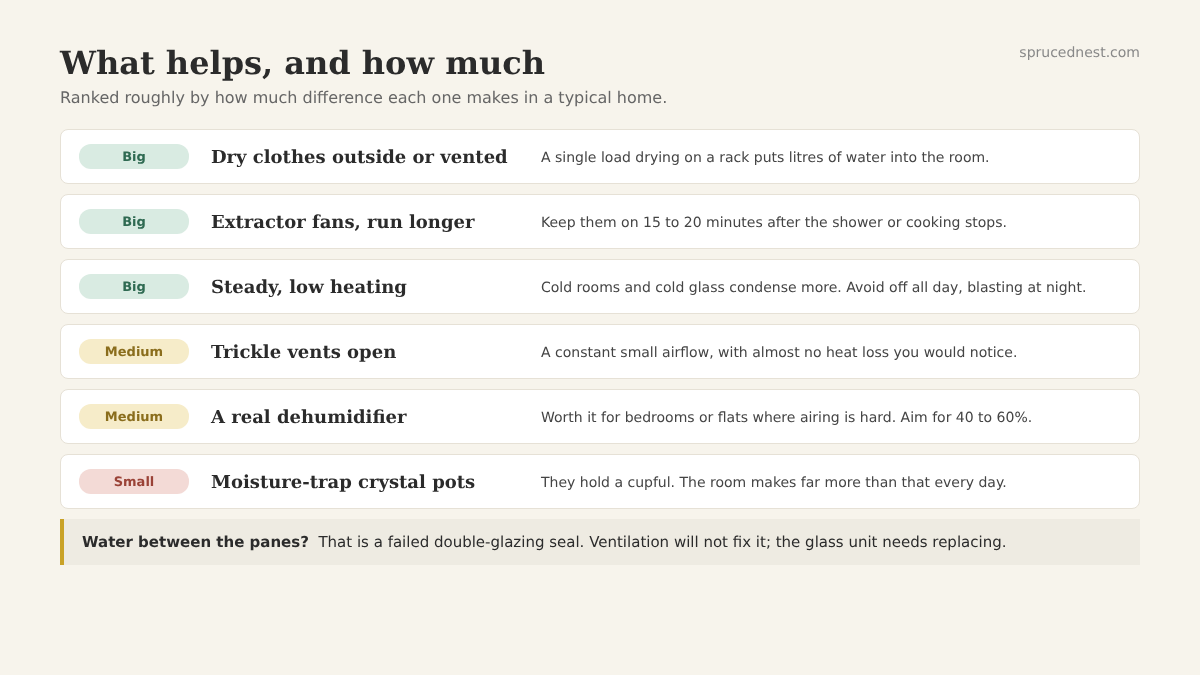
| Water between the panes | Inside a double-glazed unit | The seal has failed; the glazing unit needs replacing |
That last row is different from the others. Condensation between the two panes of a double-glazed window can’t be wiped away, and ventilation won’t help. Instead, contact a window installer about replacing the sealed unit.
Quick wins to reduce condensation on windows this week
These cost little or nothing. Try several at once for the best effect.
Wipe condensation on windows every morning
Use a squeegee or a microfiber cloth, then wring the water into the sink. Don’t leave it to evaporate, because it simply goes back into the air. Also, wipe the sill and the bottom of the frame, where water collects.
Ventilate in short bursts
Open the windows wide for 10 to 15 minutes in the morning. Fresh air swaps out the damp air quickly and clears condensation on windows without chilling the walls too much. Then close them and let the room warm up.
Use extractor fans properly
Switch the fan on before you start cooking or showering, not halfway through. Keep it running for a while afterward. If the fan seems weak, clean the grille, since dust cuts its airflow.
Put lids on pans
It sounds small, yet it keeps a lot of steam out of the kitchen air, and less steam means less condensation on windows. It also saves energy.
Rethink laundry
Wet laundry is a big source of indoor moisture. If you can’t dry outdoors, follow our steps to dry clothes indoors without damp.
Track the humidity
A cheap digital hygrometer shows how damp the air really is. As a guide, the EPA recommends keeping indoor humidity below 60 percent, ideally between 30 and 50 percent.
Long-term fixes for condensation on windows
If quick wins help but don’t solve the problem, it’s time to look at bigger changes.
Run a dehumidifier
A dehumidifier pulls water straight out of the air, which tackles condensation on windows at the source. It’s especially helpful in bedrooms, basements and homes where laundry dries inside. Choose one sized for the room, and empty the tank regularly.
Upgrade your ventilation
Extractor fans with a duct to the outside work far better than ones that just recirculate air. Some homes benefit from whole-house mechanical ventilation, particularly after insulation or new windows have made the building much more airtight. The US Department of Energy’s guide to home ventilation outlines the main options.
Improve the glazing
Double or triple glazing keeps the inner pane warmer, so less water condenses on it and condensation on windows drops noticeably. If replacement isn’t possible, secondary glazing or insulating film is a cheaper middle step.
Insulate cold walls and fix leaks
Cold external walls, damp from leaking gutters or rising damp can all add to the problem. In these cases, fixing the building itself makes everything else work better. A builder or surveyor can help identify the cause.
Mistakes that make condensation on windows worse
A few common habits keep the problem going. For example:
- Turning off extractor fans too soon. Steam lingers for a while after cooking or a shower.
- Closing every vent to stop drafts. Trickle vents exist to let damp air out, so keep them open.
- Leaving wet towels and clothes on radiators. This pumps moisture straight into a warm room.
- Heating rooms in short, hot bursts. Walls and glass stay cold, so the moisture still condenses there.
- Pushing furniture against outside walls. Still air behind it stays cold and damp.
Dealing with mold around the window
Where condensation on windows has been sitting for a while, you’ll often find black spots on the silicone or the frame. Clean these early, before they spread. Our guide to removing black mold from silicone sealant shows you how, including which products not to mix.
Once the frames are clean and dry, the glass itself is easier to keep clear. For a streak-free finish, try our method to clean windows without streaks.
Where to start
If you only do three things, make them these:
- Wipe the windows every morning and empty the water down the sink.
- Run extractor fans during and after cooking and showers.
- Keep humidity in check with short bursts of ventilation or a dehumidifier.
Those three steps tackle the moisture at its source. Once it’s under control, condensation on windows becomes an occasional cold-morning sight rather than a daily chore.